
LANDR, the AI mastering service, acquires DAW developer Reason Studios to redefine the future of music creation.
The new year is only six days old, and there’s already a change of ownership in the Music Tech Industry. It’s a bombshell.
LANDR, an AI mastering service and plugin developer, has acquired the Swedish DAW developer Reason Studios after the recent acquisition of Synchro Arts.

LANDR Reason Studios
Reason Studios has a new owner, and for the first time, it’s not Swedish. LANDR is a Canadian music tech company with a strong focus on AI. They describe it as a “major step toward building the next generation of creator tools”.
The union brings together two trailblazers in music technology with one shared mission: to give creators everywhere more power, freedom and inspiration to create.
LANDR and Reason Studios will combine their strengths to accelerate the evolution of Reason, expanding its reach, and deepening its impact across every major DAW environment.
Pascal Pilon, CEO of LANDR, says:
“Our vision is to make Reason and the Reason Rack indispensable tools for every producer, regardless of what DAW they use. Wherever music is made, Reason will be there, with its amazing instruments, effects, and iconic analog workflow–enhanced by LANDR’s value-rich creator tools.”

LANDR today promises that Reason Studios will continue to operate as its own brand, maintaining its products, community, and creative DNA.
Reason remains the DAW producers know and love, now supported by the broader LANDR ecosystem to unlock new possibilities for creators everywhere.
A Growing Reason Software
Additionally, they plan to work with Synchro Arts to gradually deliver new value to Reason users through deeper integrations, enhanced collaboration tools, and creator-focused, AI-powered features.
If Pascal Pilon’s statements are to be believed, this purchase is not intended to close it down, but rather to continue it at a much higher intensity.
“This isn’t about changing Reason, it’s about giving it room to grow. We’re preserving each brand’s identity and core market while unlocking new possibilities for creators everywhere.”
That’s not all. They are establishing an artist council comprising well-known producers and longtime Reason users. They will be instrumental in shaping the future of the platform so that it works for both new and existing users alike.
This council will ensure that Reason’s roadmap remains deeply connected to the real-world needs and ambitions of today’s creators, advising on product innovation, creative tools, and workflows.
To achieve these tasks, they provide Reason with additional resources and align the teams across the two company headquarters: Montreal and Stockholm, each with their own focus on their core strengths.
The official press release also states that the acquisition of Reason Studios reflects a growing shift toward unified creator platforms. For creators, this means wider access to high-quality instruments, effects, and intelligence-driven tools all in one place
First Impression
The influence of AI companies in the music tech industry is steadily growing. If Splice isn’t acquiring a company (Spitfire Audio…), then it’s LANDR. That this step has been taken isn’t a big surprise to me.
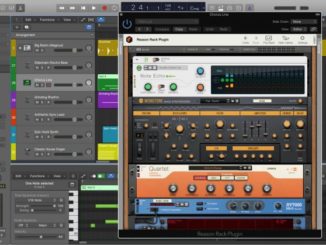
In recent years, it’s become clear that Reason Studios is no longer a top-tier DAW. This was mainly because the developers shifted their focus towards the Rack plugin, allowing Reason instruments and effects to be used in any DAW. The DAW itself took a back seat, which was unfortunate.
As noted in the press release, LANDR will also pursue this course of action: “Our vision is to make Reason and the Reason Rack indispensable tools for every producer, regardless of what DAW they use”.
Reason will undoubtedly receive many more AI tools in the future. With LANDR’s acquisition, this is at the top of the list. Subscriptions will continue to be a part of it, I’m sure, if not even more dominant than before.
Overall, we’ll have to see what LANDR does with Reason. If we revisit this topic in January 2027, we might be better informed about what they’ve done by then.
More information here: web
fxxk ai. hate that Shit.
RIP Reason, when the VC money dries up for this AI BS they’re going to suffer
Pushbutton slop.
Well Propellerheads never updated their GUI system, for over 15 years. Also using an own plugin format wasn’t very clever either. For me the two main reasons why this DAW died.
If they had VST support originally, they would be in a great position IMO. I loved playing with it (owner through 2.5), but would end up just using it to make sounds that I used in a real DAW.
I’m not a cynic, but I have been around long enough to see how acquisitions ALWAYS have upbeat, “things will be better”, “they will still be their own entity.” language, only to have the loyal users in a brief period become disillusioned. Reason has been one of THE MOST end-user loyal music companies that I have ever seen since 2000. No BS, no formality, just the purity of helping us all make music with our beloved Reason. Those that acquire seem to never fully grasp the SOUL of what they have acquired.
I was really worried when I saw the headline, but after digging a bit, I see that Synchro Arts has been owned by Landr for over four years and has continued putting out new versions of plugins like VocAlign, seemingly without any meddling from their corporate parent.
If Reason Studios gets the same treatment, this will actually be a huge improvement over being owned by Verdane Capital.
Did they explicitly call out AI when they bought Synchro Arts?
Image-Line (FL studio) acquired UVI and they seem to be doing fine. while Apple killed most stuff it bought once integrated into Logic. so really depends..
The future I see for Reason is being the audio generation segment of an end-to-end AI slop process. It will be the domain of totally non-musical “producers” whose only talent will be in writing AI prompts.
But why does that concern you?
That’s someone else’s business. Mind your own.
Damn, good argument. No, in all seriousness, I think it is a much broader concern to the music industry considering that we already have a bunch of guys working in it who actually don’t do much in particular and to have to deal with those kinds of people within the creative sphere creating nothing but generated garbage with little to no knowledge of what they are actually doing is going to be downright insufferable.
I’m speculating on this news topic. Why does that concern you?
That’s my business. Mind your own.
I have been a long time user of Reason – since version 1 and still using it occasionally but mostly as Reason rack in Cubase Pro. I remember the days of ReBirth 338 that used to have Propellerhead and Steinberg logo on it’s login screen so it looks like it is Reason acquisition number 3 – hopefully 3rd time lucky 😉
I have read the entire statement from LANDR and I hope that Reason will finally come out of stagnation and future versions will offer something new and exciting 🙂
I’m not a perfect person
There’s many things I wish I didn’t do
But I continue learning
I never meant to do those things to you
And so I have to say before I go
That I just want you to know
I’ve found a reason for me
To change who I used to be
A reason to start over new
And the reason is you, LANDR
It’s far more interesting to train it on your own original material & recorded sounds. And don’t use text inputs except as a secondary guide. The “prompt” should be your own work (whether it’s a MIDI file, audio, image, etc.)
If you want to do things independently of these corporations and their creepy clouds, unfortunately, you have to buy your own hardware.
Avant-garde composers from Brian Eno to John Cage (and other household names) have composed and written about music based on Chance, Algorithms, and other complex processes, under the umbrella of “procedural music” (counterpart of procedural art).
John Cage wanted to use it to disrupt the idea of the might “Author,” evidently a newer concept judging from the old conventions of anonymous (unsigned, uncredited) artworks, songs, buildings, etc. It arrived with the modern “Self,” the autonomous individual. Cage, a composer, wanted to take composers down a notch. He composed pieces of music using random numbers; he wanted to get his authoritarian ego as far removed from the process as possible, in order to simply plant some initial seeds, in order for music that would “write itself.”
The most well known living proponent of procedural music is probably Brian Eno. In the 80s and 90s he actively worked with programmers to develop various software prototypes for “Automatically” generating music by the push of a button.
Of course, these were entire SYSTEMS that he built from scratch, “Himself.” Plus all the people who helped him, who taught him, who built the chips and the casing for the computer, even his housekeeper or whatever who allowed him to spend time on computers instead of doing chores. The idea here is few works of art are ever made in a vacuum, even if they are credited to a single name. In every case, the work would be unimaginable without all the influences that preceded it. In some sense, Cage felt that by putting the COMPOSER of the author on a pedestal, we were somehow missing out on the bigger picture. I think they now call it the “butterfly effect,” it’s the same thing.
Eno was already the pushbutton king of Soft Background Music before computers were a common family appliance. And people treat him like he’s Mozart (who also stole a lot of his ideas, from his contemporaries, and he was hardly the only one.)
So yeah screw these companies. They should be totally avoided. But there would be nothing wrong if creative artists wanted to use it critically and develop new techniques and styles. In fact, I _wish_ more people would use it for that, as opposed to “astronauts on horseback” memes.
As Reason is my only DAW at the moment I’ll reserve judgement and see what 2026 brings. If Reason as a DAW is not going to be developed and just the rack element then I’ll switch to Bitwig or Studio One as they are both more developed as DAWs.
We shall see…
Reason took way too long in include audio recording, then was way too expensive, then they tried a horrendous subscription model.
A surrender to private equity was always on the cards.
Alter Schwede! Since there is already big trouble on the Ostfront, this news is perhaps a good reason to start rebuilding the Westwall again.
with David Hasselhoff?
Ouch. Here’s hoping they continue to exist in a similar form for a few more years at least. Guess I’m happy I’m already migrating to Reaper, but I do still enjoy using the Reason devices as plugins because I already know them fairly well. If the impact of this is minimal, then great. If not, I’ll hopefully be somewhat ready for it.
If they don’t update their sequencer and it’s relation to the mixer then I’m not going back. Reason is WAY behind other DAWS as it is.