
CME H12MIDI Pro is an upcoming USB Host + TRS MIDI interface with WIDI expandability designed for modern setups.
MIDI interfaces are available from many manufacturers across all price ranges. Most of these use the classic 5-pin MIDI ports. Only a few on the market feature the important USB host ports, especially for gear with USB MIDI-only ports.
CME, who already offer modern interfaces with USB host functionality in its H series, is now following up with a flagship product: the CME H12MIDI Pro.
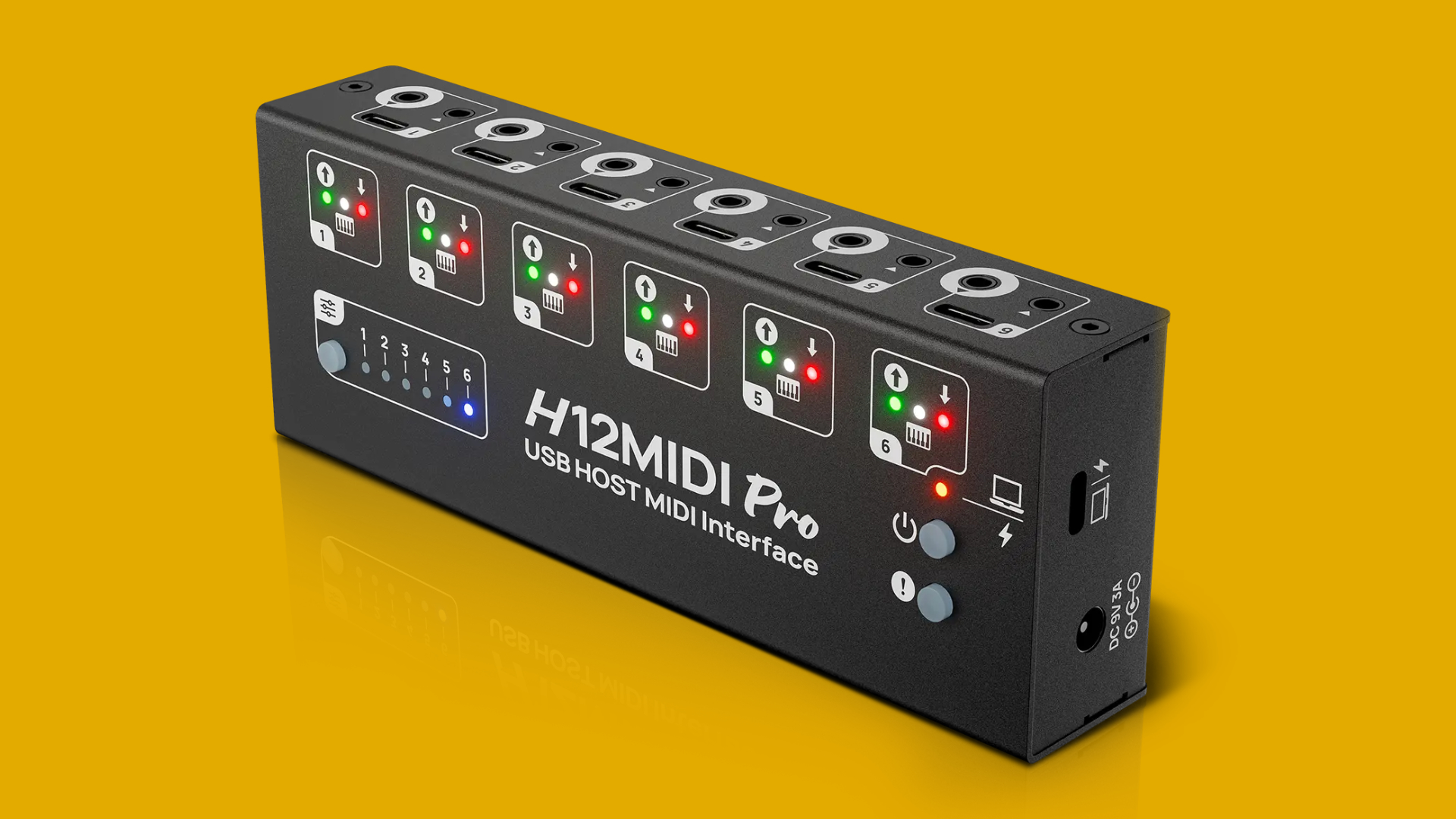
CME H12MIDI Pro
The H12MIDI Pro is a new USB Host MIDI interface that works fully standalone. It’s not just a simple MIDI interface; it’s more like a brain, bundling a lot of functionality. CME describes the H12MIDI Pro as their next-generation standalone MIDI solution.
CME’s developers promise that the built-in, future-proof 32-bit processor enables high-precision transmission at 4x the speed with groundbreaking accuracy.
The design of this new interface is unique because it doesn’t use classic 5-pin MIDI sockets. It offers six inputs and six outputs on 3.5mm TRS MIDI sockets, configurable for type A or type B via the dedicated software.
You can use adapters in case you need the regular 5-pin MIDI sockets. A unique feature of the H12MIDI Pro is its extensive USB host connectivity.
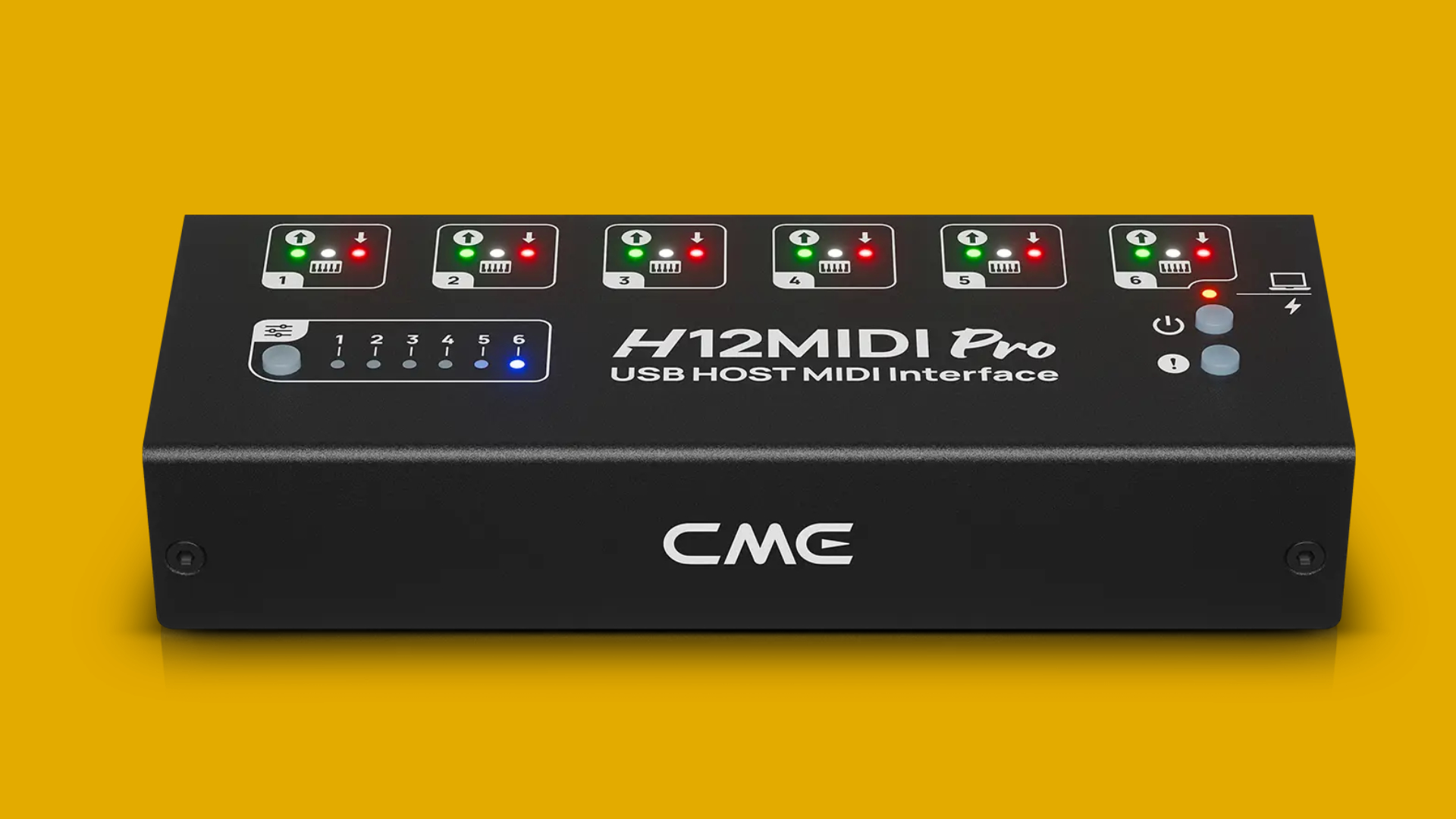
It features six USB-C hosts, giving you up to 16 in and 16 out host ports. Plus, you have a 1 USB-C that delivers up to 8-in and 8-out client ports. In total, the CPU can handle up to 480 channels.
So we get an alternative to the iConnectivity mioXL that’s significantly more compact, making it perfect for mobile setups.
The USB-C host/client ports and TRS MIDI sockets let you connect your USB MIDI keyboards, modules, controllers, synths, pedals, and more.
It’s usable standalone or plug-and-play with a computer/tablet, and it doesn’t matter which brand. It works with macOS, Windows, iOS, Android, Linux, and Chrome OS.
Advanced MIDI Data Modification & WIDI Expandable
CME MIDI interfaces are popular with musicians primarily because of their extensive customizability. These tools are also built into the new H12MIDI Pro and are fully customizable with the cross-platform HxMIDI Tools software.
More importantly, all your settings are stored internally in six presets, so your routing remains exactly as you designed it, even after a power cycle. You can also switch between configurations without a computer.
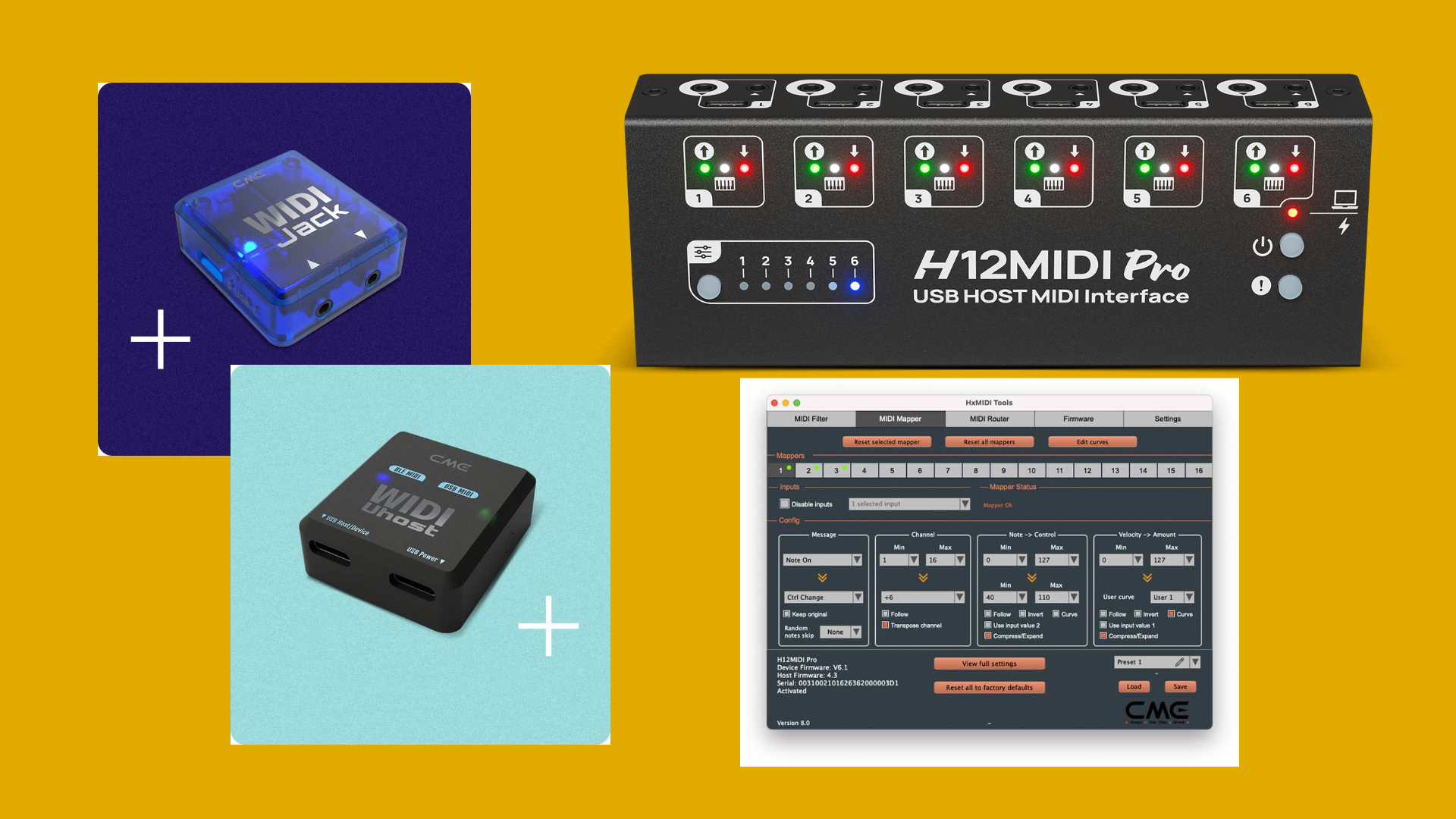
Alongside full clock, sysex, MTC, and MPE support, the H12MIDI Pro interface lets you route, filter, map, and remap messages, split and merge channels, manage presets, and more.
As a bonus, you can even expand the H12MIDI Pro with the CME WIDI technology, giving you ultra-low 3ms latency Bluetooth MIDI. Add the CME WIDI Jack or WIDI Uhost, and you get a hybrid MIDI hub.
The H12MIDI Pro offers versatile USB-C or 9V DC power options and a dedicated 25-LED feedback system that gives you instant visibility of every port and function in your MIDI setup.
First Impression
There are countless classic MIDI interfaces. Interfaces that focus specifically on USB host functionality are rare, and it’s very welcome to see such a flagship model on the market in 2026.
Especially for hybrid setups with many classic MIDI and USB duties, this could be the perfect brain.
CME H12MIDI Pro presale starts January, with shipping in February 2026 for an introductory price of $139 USD. The MAP/MSRP price will be $199 USD.
More information here: CME

Yes but… What about devices that transport MIDI *and* class-compliant multitrack audio interfaces over the same single USB port? Eg MC-707 groovebox, Zoom L6 and L6max mixers…
And other instruments that use USB for MIDI and remote instrument control (Korg Wavestate, Multi/Poly, Modwave, opsix, etc)?
I would love to be able to combine my USB hub and CME U6MIDI Pro 5-pin MIDI hub into one device, delete the 5-pin MIDI cables on the devices that also pass MIDI over USB, and have retain multitrack USB audio and control to my computer.
Get at it CME!