
Developed in collaboration with guitarist Yvette Young, the Walrus Audio Qi Etherealizer is a hands-on granular multi-effects pedal designed for dreamy soundscapes. This review explores whether it delivers on that promise.
Granular synthesis is a big topic. In plugins, synthesizers, iOS apps, and even guitar pedals. Last year saw many new additions to the pedal world with granular processing capabilities. The most recent and perhaps surprising was the Eventide H90 with four algorithms.
At NAMM 2025, Walrus Audio released the Qi Etherealizer, a stereo multi-effects pedal with granular processing, in collaboration with guitarist Yvette Young. I had the opportunity to test this pedal with synths for you.

Disclosure: Face BE, the European distributor, has sent over a Walrus Audio Qi Etherealizer for review. They sent it to me for free, but have no say over the review and don’t get to see it before I publish it.
Walrus Audio Qi Eteralizer Summary
Pro
- idea machine
- hands-on stereo multi-FX processor
- no menu-diving
- effects range and algorithm quality
- onboard presets
Neutral
- it’s an experimental, special-interest pedal that does not trigger GAS in everyone
Contra
- pricey
- missing line/instrument switching option
Walrus Audio Qi Etherealizer Review
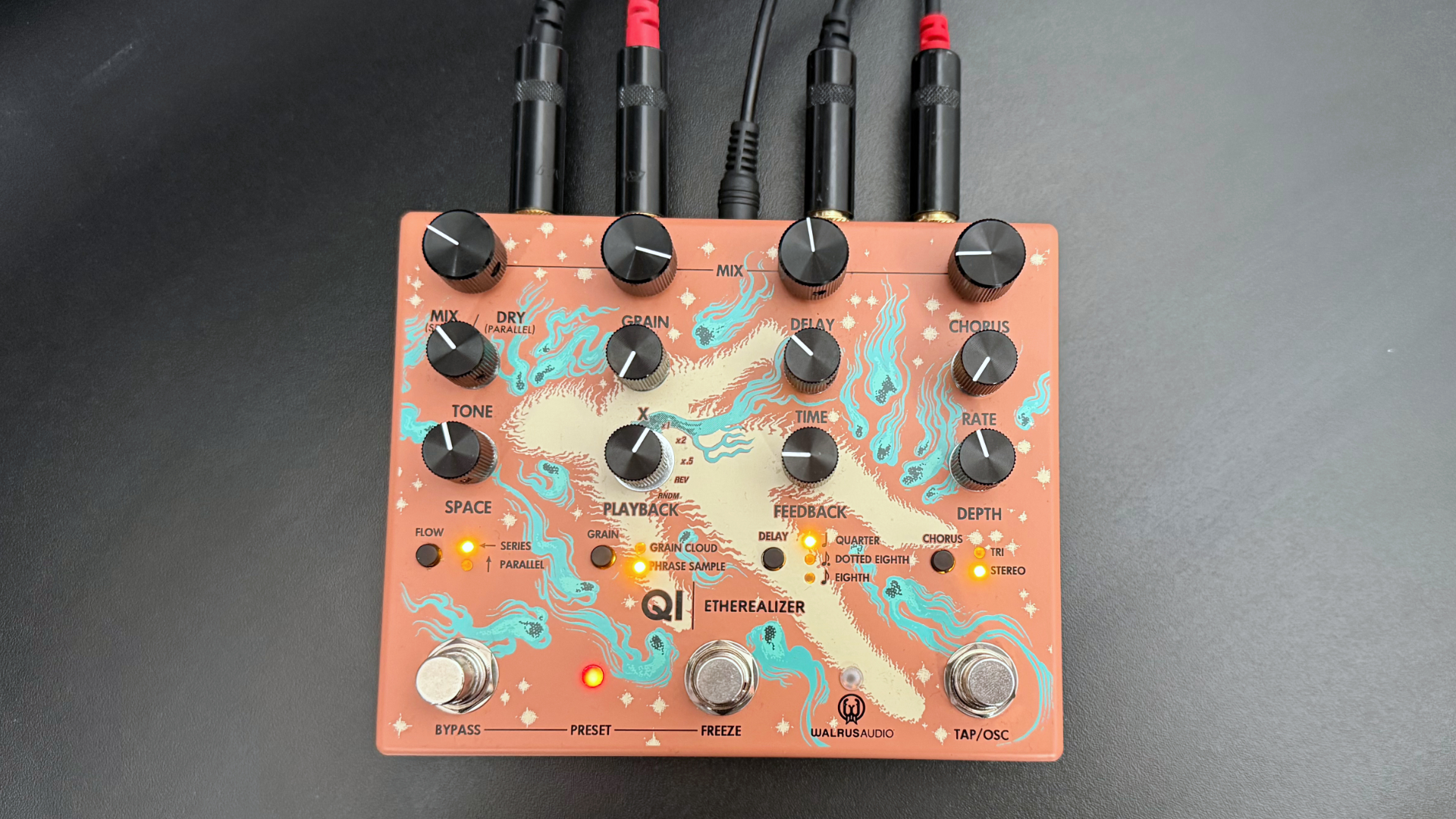
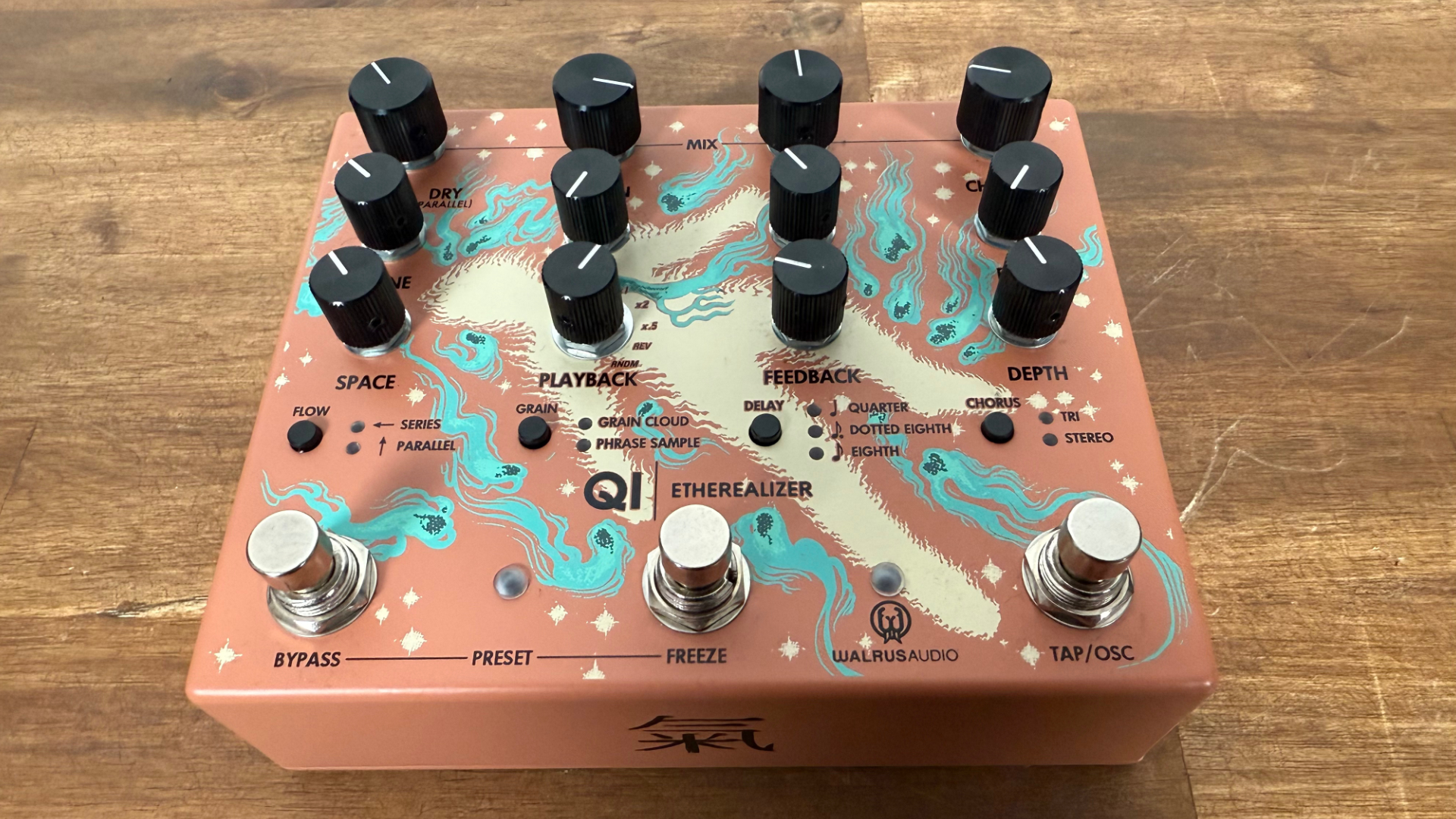
The Qi Etherealizer is a multi-FX processor that comes in the classic guitar pedal shape, with knobs and three footswitches. This shows that it was primarily designed for guitarists, but any guitar pedal can be just as fun with synths.
That’s also the goal of this review: to test the Walrus Audio Qi Etheralizer with electronic sounds, such as synths and samplers, to cover this sound area as well. I assume there should already be enough guitar demos available.
Classic guitar shape, but available in two distinct colors: terracotta with fairytale-like blueish decorations or plain black.
Connectivity
Let’s take a look at the back. You have stereo connectivity with two 3.5mm mono sockets on each side.
There are MIDI input and MIDI Thru ports on two 1/8” TRS minijacks, including MIDI sync support. Plus, a USB-C port for firmware updates and a 9VDC power supply input.
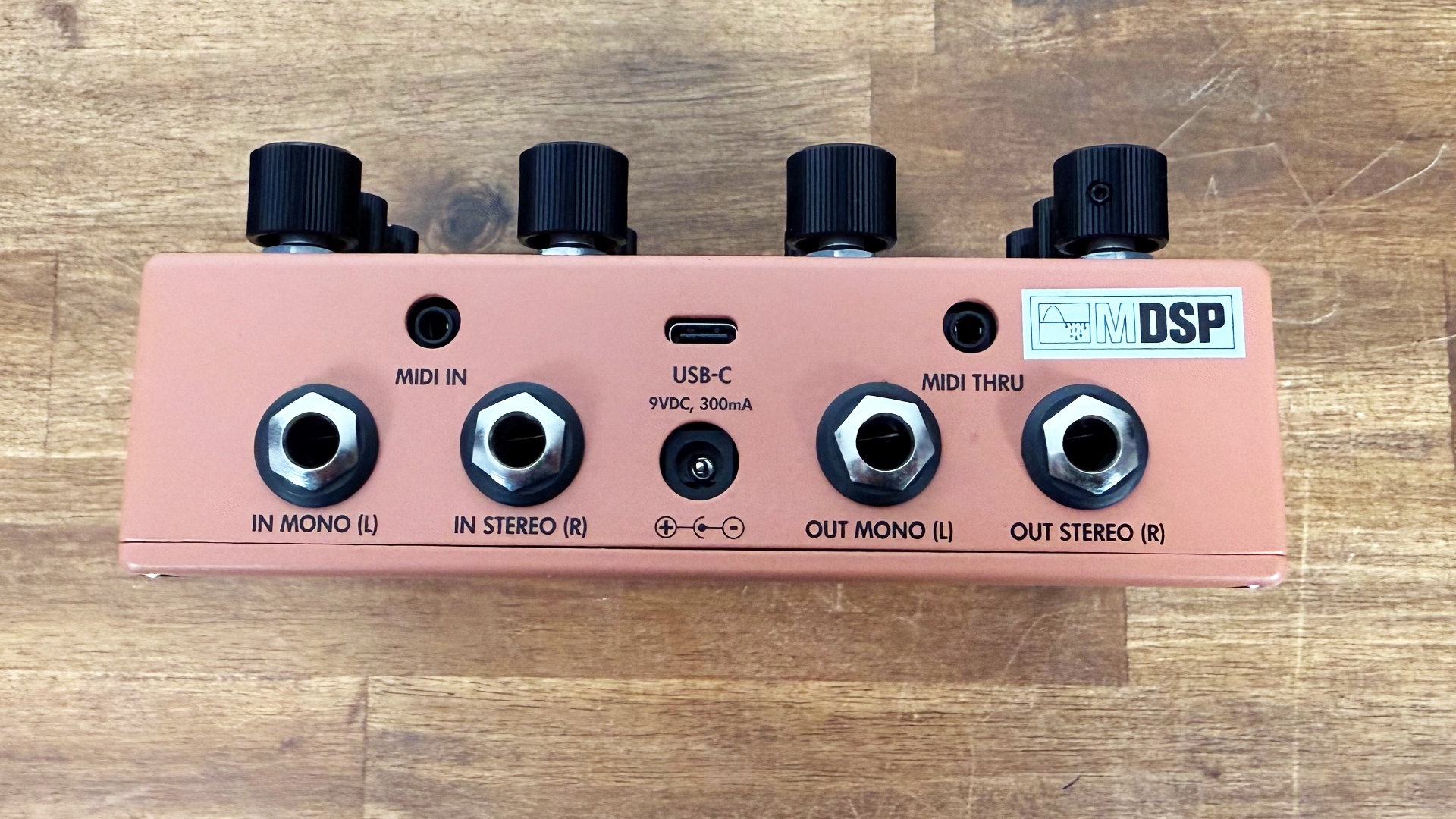
However, there is no option to switch the inputs between the line and the instrument level. I’m always happy about this option because it means the developers have ensured it works perfectly with signals other than the guitar.
Synthesizers have a substantially higher output level than guitars, so you never really know how the engine will handle the signal. In practice, I already had pedals that sound better with guitars than with synths.
Interestingly, they omitted an expression pedal input, which is an important feature for guitarists. On the back is also a sticker that showcases that the pedal is powered by Walrus Audio’s new proprietary MDSP digital processing platform.
Serial Or Parallel Processing
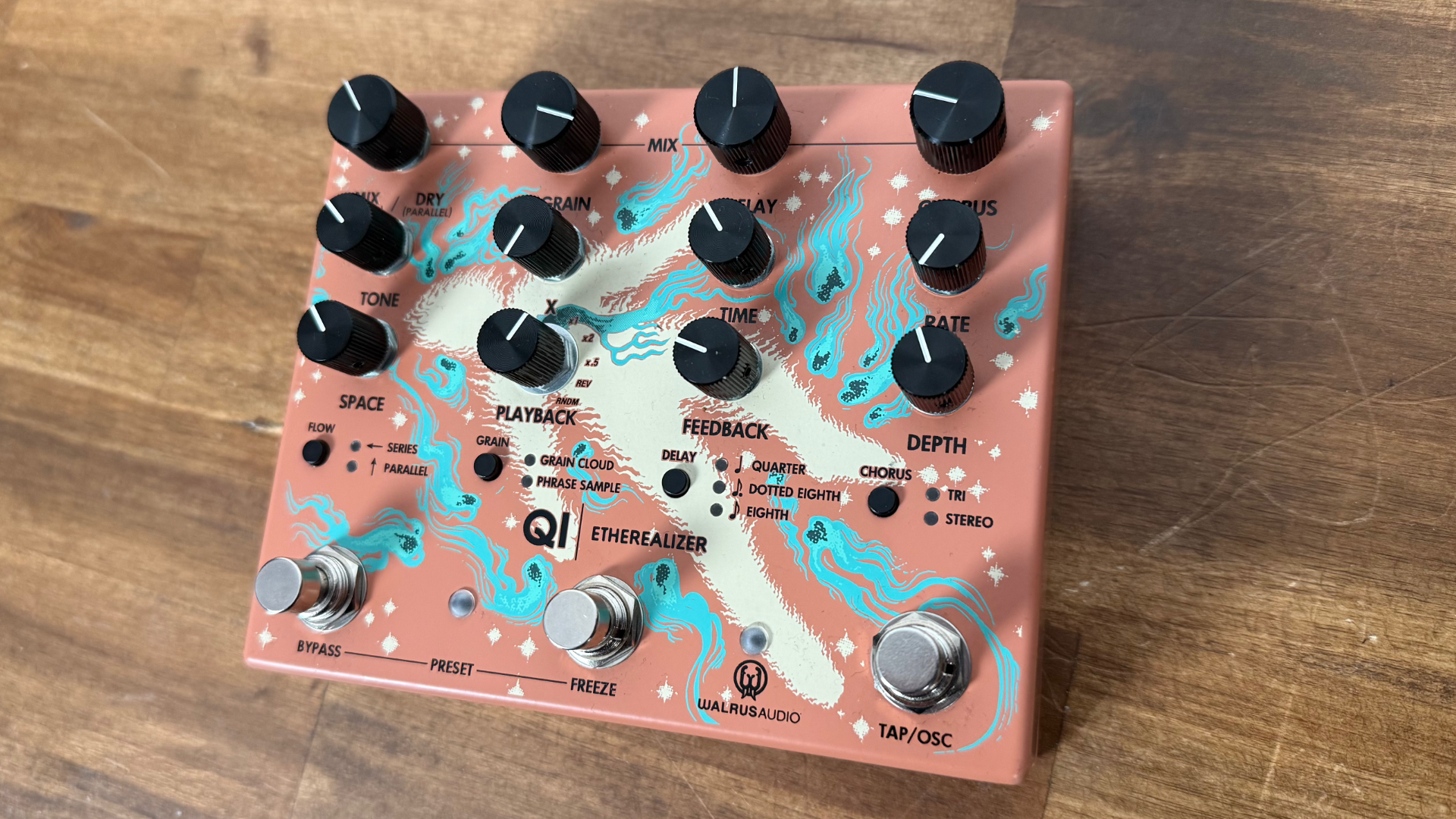
The faceplate isn’t just colorful; the engine is too. Walrus Audio Qi Etherealizer is a stereo multi-FX unit featuring five hands-on effects. The core of the signal path consists of three main effects: chorus, delay, and grain.
Each has its own dedicated mixer for adjusting the effect amount. This mix then feeds into a reverb, and the final signal can be further shaped with the tone control, also known as a filter.
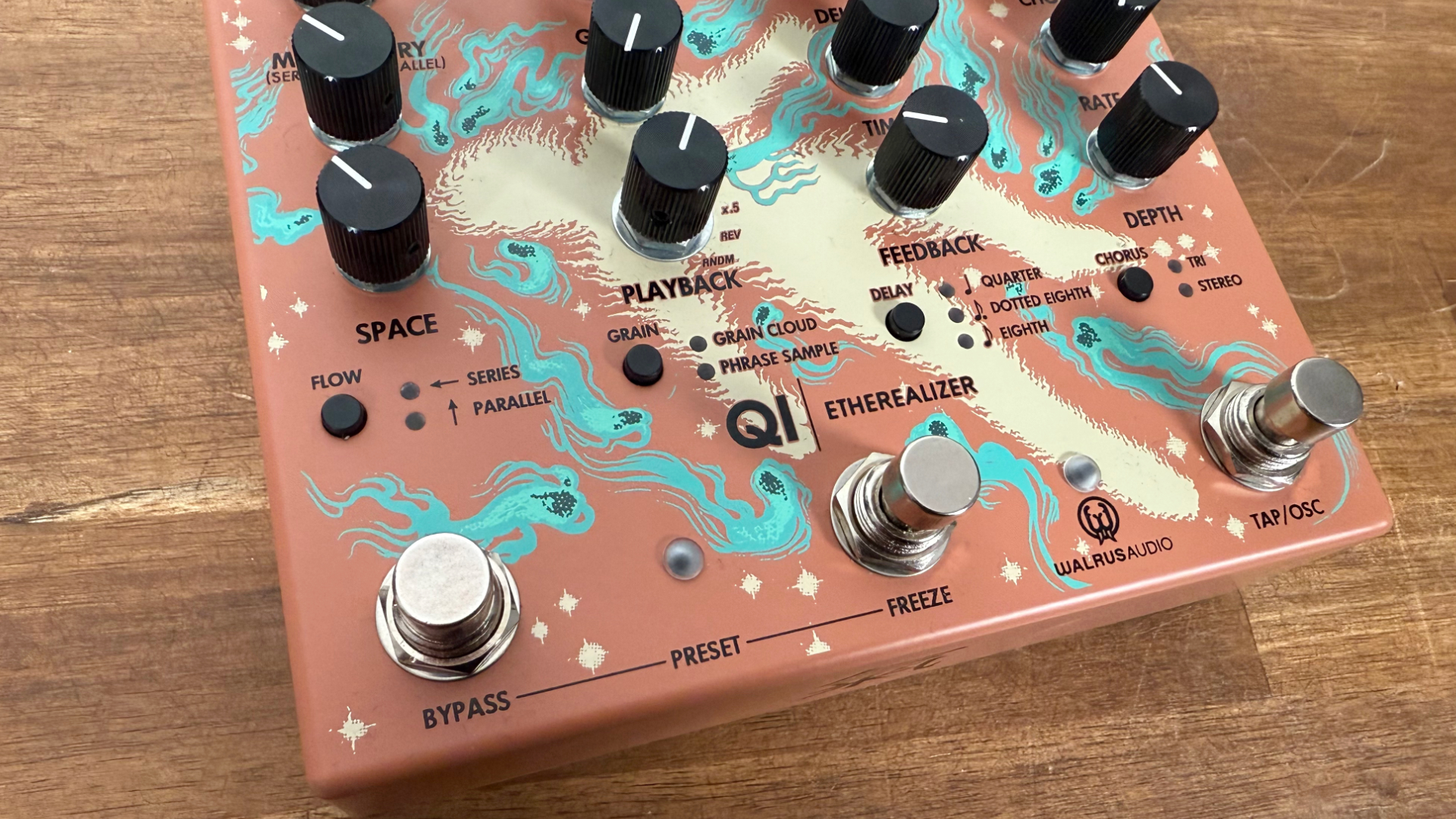
Before experimenting with the effects, you must choose between two operation modes: series or parallel. With the “FLOW” button, you can set it on the fly. Depending on which routing method you’re using, each effect’s mix knob will work differently.
In series, the signal goes from right to left, starting with the chorus, and each effect feeds into the next. Expect the reverb and tone, which are master FXs. In parallel mode, the individual effect outputs are summed together and do not feed into each other.
In the test, I prefer the series mode. Firstly, “feed into the next” produces nicer, richer results. Secondly, it’s closer to the pedalboard workflow. Even though the parallel mode also gives you excellent results. My point goes to the series mode.
Both options let you dial in an individual effect or a combination using the mix knobs. You can also turn the main effects on or off by pressing and holding the button below its knob array. So it doesn’t work like a conventional multi-FX stomper
Colorful Multi-FX Algorithms
The first effect is a Chorus with two selectable flavors. Tri Chorus is a wide, rich-sounding chorus, while Stereo is a classic chorus with stereo width control. I have to disappoint you, it’s not a Juno-based chorus.
Don’t worry, both sound beautifully lush. You can easily tweak it to your taste with the rate (LFO) and depth parameters. From subtly thickening wobbly effects to heavy pitch modulations. For the minimum amount of controls, it’s very versatile.
A surprise hides beyond the fully clockwise knob position in stereo mode, where the chorus becomes a vibrato. Then, you have a delay of up to two seconds. It’s not a groundbreaking or experimental delay you’ve never heard before.
It’s more of a bread-and-butter crisp, digital delay with a pleasing character. It has the usual controls (repeats, feedback…) and supports quarter-, dotted eighth-, and eighth-note tap divisions.
More experimental and atypical is the built-in granular processor called grain. Better known in synths, but less so in pedals. Basically, it samples portions (grains) of the live input and plays them back in an unusual, glitchier way.
Two Granular Flavors
On the menu are two granular modes: Grain Cloud and Phrase Sample. The first follows a more classic granular approach, where the engine triggers small snippets (grain) at random. You can control the length of time between grains with the X knob.
One button press away is the Phrase Sample, a fun, rhythmic grain engine that triggers them from peaks in your playing. Turn the X knob to adjust the tempo at which the samples are played back. You can also sync it to the delay time to get the best results.
An important feature not to miss in this Walrus Audio Qi Etherealizer review is the grain engine’s five playback modes. Fun is the reverse mode that gives you psychedelic effects or the random, where it randomizes every mode for complete grain madness.
With the double, you can also achieve lovely shimmer-like results. Every mode has its own vibe and level unpredictablity that you love to work with. The first engine has the best instant “grainification” factor for me. The second one is fun, but it takes a while to get good results.
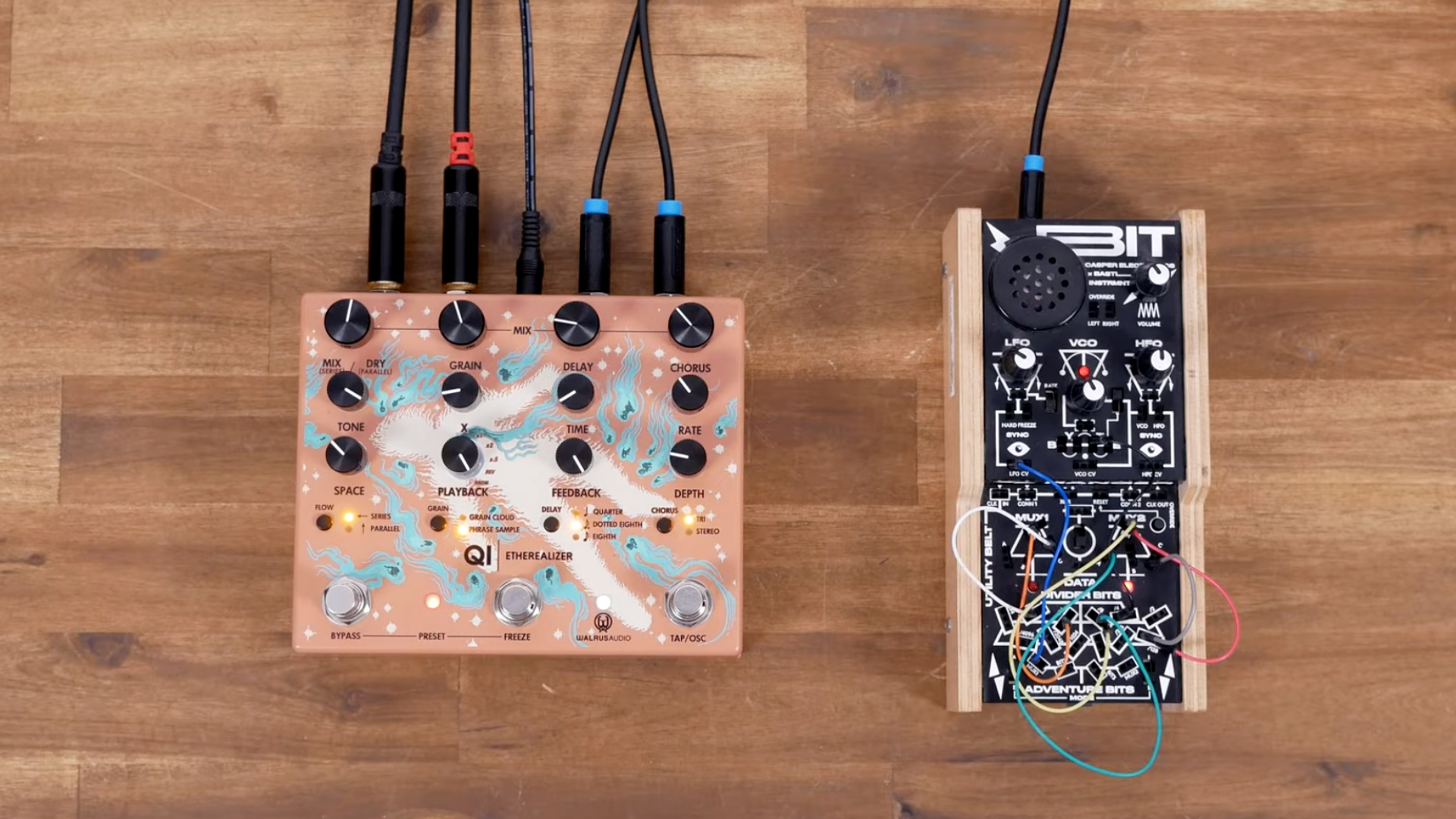
In direct contrast to granular plugins, this offers a macro-based granular snack focused on quick, pleasing results. It’s less suited for your deep-grain, geeked-out explorations. But it’s hands-on and menu-free.
There is also a grain buffer freeze function that can be launched with the dedicated footswitch. It captures a section of your playing, so it loops indefinitely, giving you instant, super-lush soundscapes.
The grain generation is fun and inspiring. However, I recommend using them with the other effects because granular alone sounds a bit weird. Combine it with delay or reverb, and you’ll unleash the engine’s true beauty.
Into the Space
Before the granular scapes are unleashed, the whole thing can be enriched with reverb. Highly recommended. It’s just a single knob “space” that injects room-like spaces at lower values and super lush epic ambiences at maximum.
But be warned. The reverb has a tendency to eat everything you put in front of it – even in the middle section, but it’s what brings all the grains to sparkle. Right after the reverb is a resonant lowpass filter called tone that lets you shape the top end of your sounds.
Start fully clockwise, and turn the tone control back to achieve darker settings. A dry/wet knob is also onboard with distinct behaviour depending on the chosen routing mode.
The developers forego a modulation system that would allow you to animate parameters. That would have been interesting, though.
Walrus Audio gives you three hardware preset locations and 124 more presets accessible via MIDI. So plenty of room to express oneself. But what do the results sound like? Is it a one-trick pony or something more?
Soundscaping
Qi Etherealizer isn’t for subtlety, but it can. It’s designed for creating multi-layer soundscapes. Nope, it’s not a one-trick texture machine. Start slowly and gradually increase the intensity, seeing how the pedal affects your sound.
It’s a playful discovery with many direct and intermediate stages. Quick tweaks aren’t its strength; it’s more about longer-term experimentation with a trial-and-error approach.
Qi E is not just a stereo processor for all kinds of ambient/atmospheric-oriented ear candy; it’s also an idea machine. Plug in your synth or guitar and interact with it. Often, it’s the smallest grain loop that leads to the next track.
For everyone else, Qi Etherealizer is a hands-on ambient/atmospheric machine. It creates galaxy washes, swarming textures, spacy sounds, and everything in between, ranging from otherworldly to beautiful weird.
Walrus Qi Etherealizer Review Conclusion
Walrus Audio Qi Etherealizer is a truly unique stereo effects unit that is likely to polarize opinions. On one side, it covers familiar ground with classic effects found in countless pedals.
On the other hand, its defining feature is the “grain” processor, which pushes the pedal into experimental territory.
The granular effect introduces unpredictability, movement, and playful chaos, transforming conventional chorus and delays into glitchy, pitch-shifted, and textural soundscapes. This element will either inspire creative exploration or not.
The number of available algorithms is deliberately limited. While this may seem unusual for a multi-effects pedal, it is not necessarily a drawback. Instead, the Qi Etherealizer takes a “less is more” approach, avoiding option overload and focusing on immediacy.
By doing so, it sidesteps a common weakness of many multi-effects units and delivers a more playful, hands-on, and inspiring way to generate bloomy soundscapes, encouraging exploration rather than menu diving.
It’s pricey, yes, but if you have the budget, you should definitely put the Walrus Audio Qi Etherealizer on your checkout list; it convinced me in the review.
Walrus Audio Qi Etherealizer is available now for $449,99 / 519€ in either Terracotta or Black.
More information here: Walrus Audio
Available from my partners
Sweetwater

Great demo and a pretty good sound. But it’s so ugly!
you can get it in plane black 😉
+1 on needing a line/instrument switch. Beautiful sounding pedal that clips like crazy with a hot synth signal. I got it early and asked walrus what to do. Reamp was the only recommendation at the time. It does help but it’s certainly limited how much I use it. If you don’t have a stereo reamper box that could add another $300+ for a used Radial.