
NAMM 2026: Korg phase8: the long-awaited innovative 8-voice acoustic Synthesizer from Korg Berlin that is unlike anything else is finally here, almost.
Most synthesizers are developed in secret. It’s rare for companies to involve the community in the development process. Behringer does this regularly, but it’s different from other big players like Arturia, Roland, and Yamaha. They occasionally conduct surveys, but not more.
Korg Berlin did it differently. The Korg Japan subsidiary showcased the progress they’ve made with the innovative phase8 Synthesizer to visitors at several Superbooth editions. For NAMM 2026, Korg releases the phase 8.
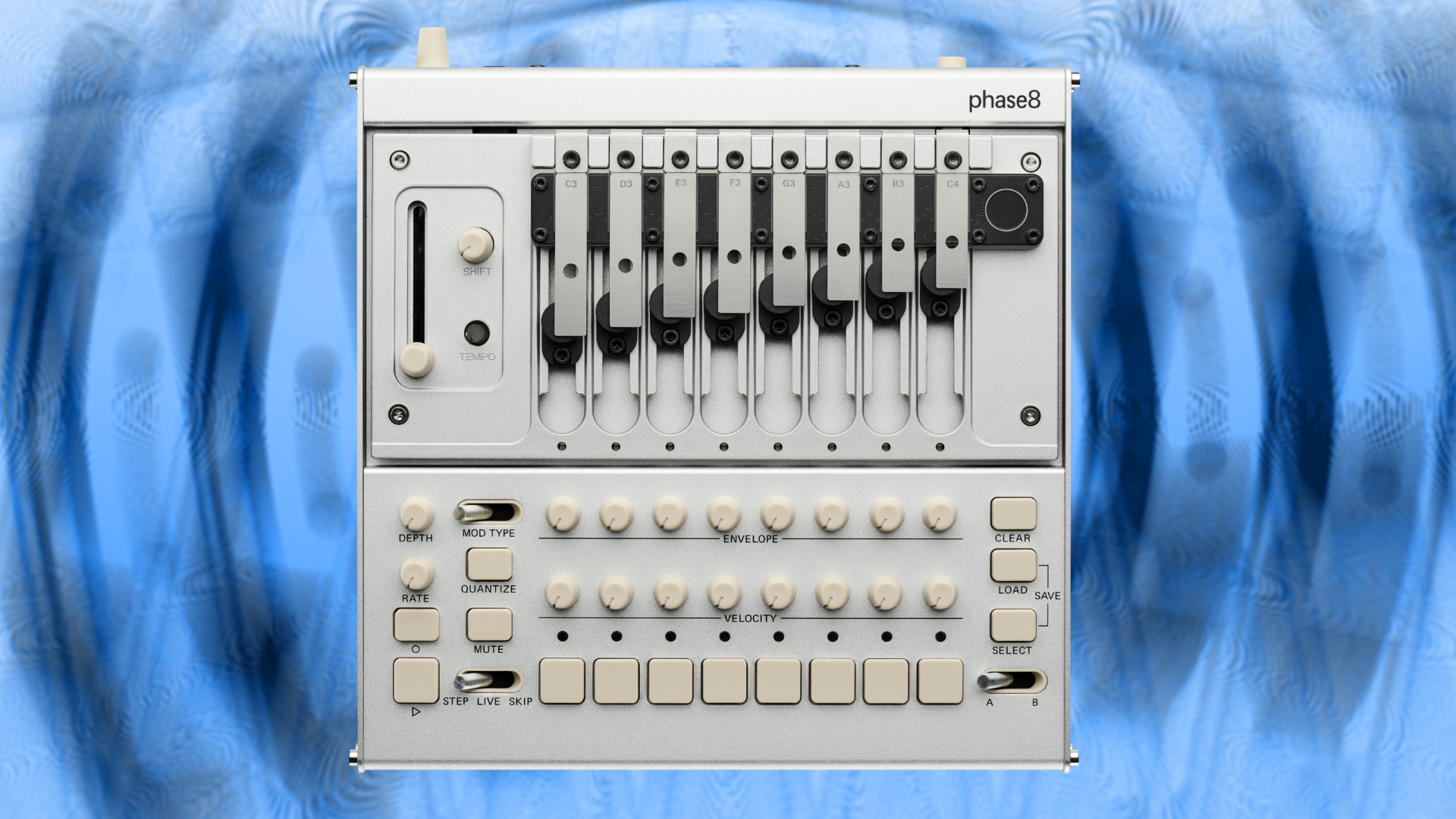
From Phase5 To Phase8
In 2019, Tatsuya Takahashi, developer of the monologue and other Korg synths, founded Korg Berlin, a sister company of Korg Japan. This new division stands for sustainable “things that matter”.
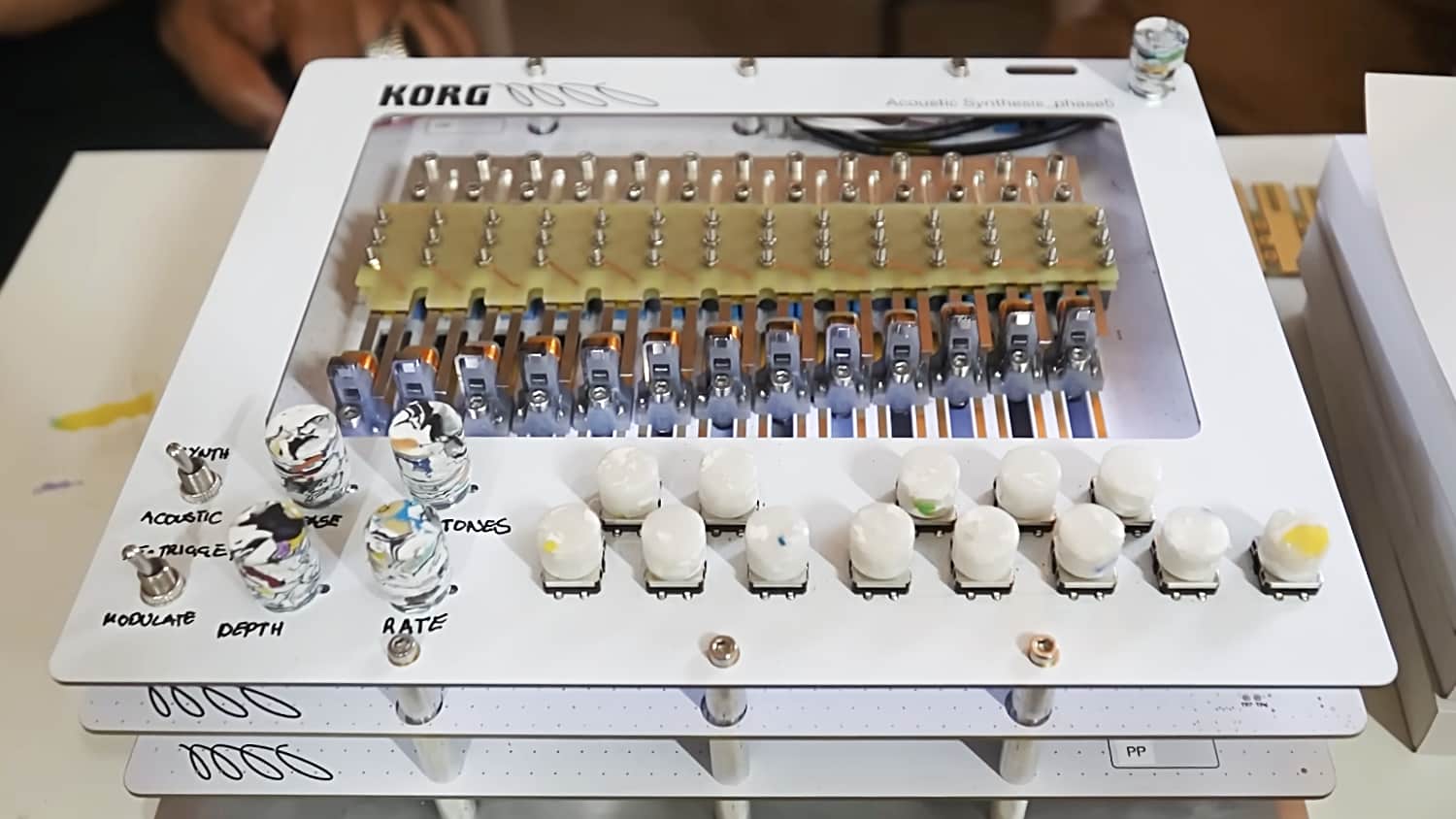
A year later, the Korg phase5 became the phase8, getting ever closer to a finished product. The following year, at Superbooth 2025, it was almost there. At NAMM 2026, Korg showcases the commercial version, which will be available for order very soon, but what is phase8?
Korg phase8: when acoustics meets synthesis
At its core are eight independent electromechanical voices that generate their sound using interchangeable steel resonators. What some plugins attempt to model so precisely, phase8 achieves in real life without code magic.
The steel resonators are a key feature of the phase8. They can be individually tuned, swapped, and even mechanically manipulated. Yes, they are swappable. It ships with 13 chromatically tuned resonators; 8 of your choice can be installed at any one time.

Where you turn knobs on a classic electric Synthesizer to tailor the sound to your liking, you change here the hardware resonators to customize the scale and character of the instrument. A completely new approach to sound design.
Under each resonator is an electromagnet that sends a pulse of energy, causing it to vibrate/move. Built-in capacitive microphones capture these and make the resonator audible.
Real-Time Hardware Manipulations
This is the core idea behind phase8. Just like an acoustic guitar or any other acoustic instrument, the sound of phase8 responds to physical interaction, such as touch and acoustic feedback.
How I play it has a significant impact on the sound and character. With the Korg phase8, you do this by manipulating the resonators. You can touch them with your fingers, with a pencil, or by placing an object on them (stone, wood, etc.).

Don’t worry, it’s designed to be plucked, strummed, or tapped. With the dedicated AIR slider, you can boost or lower the acoustic response of whatever you bring in contact with the instrument.
The exciting thing here is that you can do these manipulations for each resonator independently, giving you distinct timbres. One is more muffled, another brighter, another sharper, and so on.
This encourages the user to experiment and see the effects of different resonator manipulations. In a classic synth, you tweak the oscillator knobs and see what’s possible. Here, you interact directly with the hardware and its inner core.
The “Synthesizer” Core
You can play it like a keyboard with individual button keys, with tweakable velocity and envelope. The latter is a release envelope that lets you produce everything from short, alive, organic percussive sounds to long, drawn-out sustain notes.
Then, it has a hands-on sequencer that supports both step programming and unquantized live recording. Each voice offers a step skip function, great for polymetric sequencing. You can also save up to 8 sequences in the internal memory.
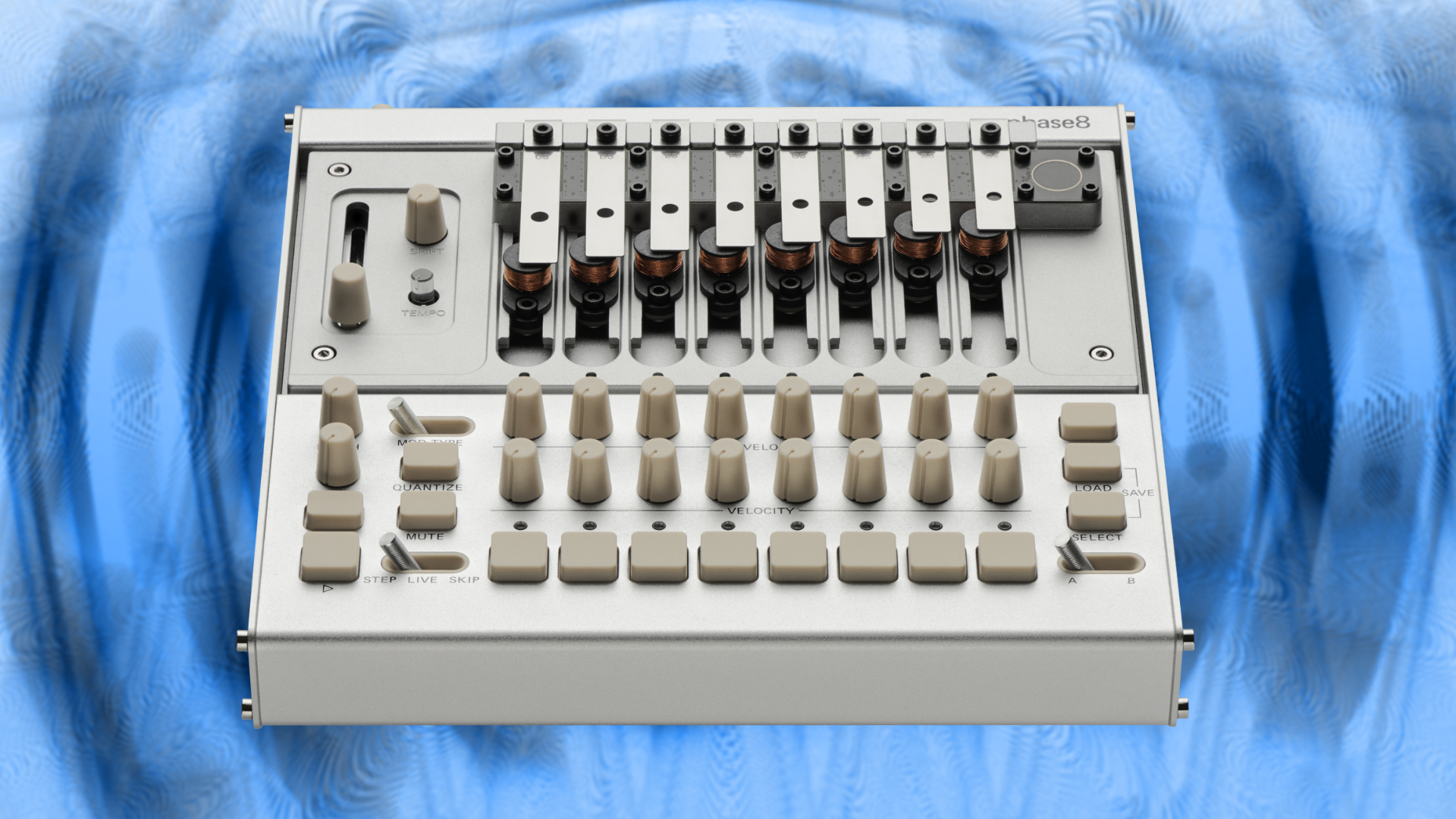
Depending on the resonator configuration, you can create organic rhythmic patterns or melodic sounds.
On top of that, you can record the controls of the synth part into a sequencer, using the record function, giving you not only vibrant (alive) but also evolving sounds. Neat, you can also mix these playing modes and play a sequence, and play with your finger over it.
Using the instrument’s shift knob on the left side, you can add delayed triggers to the resonators relative to the selected or synced tempo.
Further, you can use analog wavefolding and three amplitude modulation effects injected into the audio signal path, including tremolo, as well as two audio-rate, pitch-dependent modulation types. The latter can be harmonically quantized optionally.
In addition, these are also fully automatable in the sequencer. These were introduced at Superbooth 25 and sound very unique and lovely in combination with the acoustic resonator sounds.
Integration With Modern Setups
One might think that the Korg phase8 is difficult to integrate into modern setups. That’s wrong. It has everything you need to bring into your existing systems. Let’s take a look at the backside.
It starts with a USB-C port for firmware updates and MIDI duties. Next to this is a CV input that can be used to control the knob parameters. Phase8 features MIDI in and out on TRS mini sockets as well as sync in and out, so you can sync it to external devices.
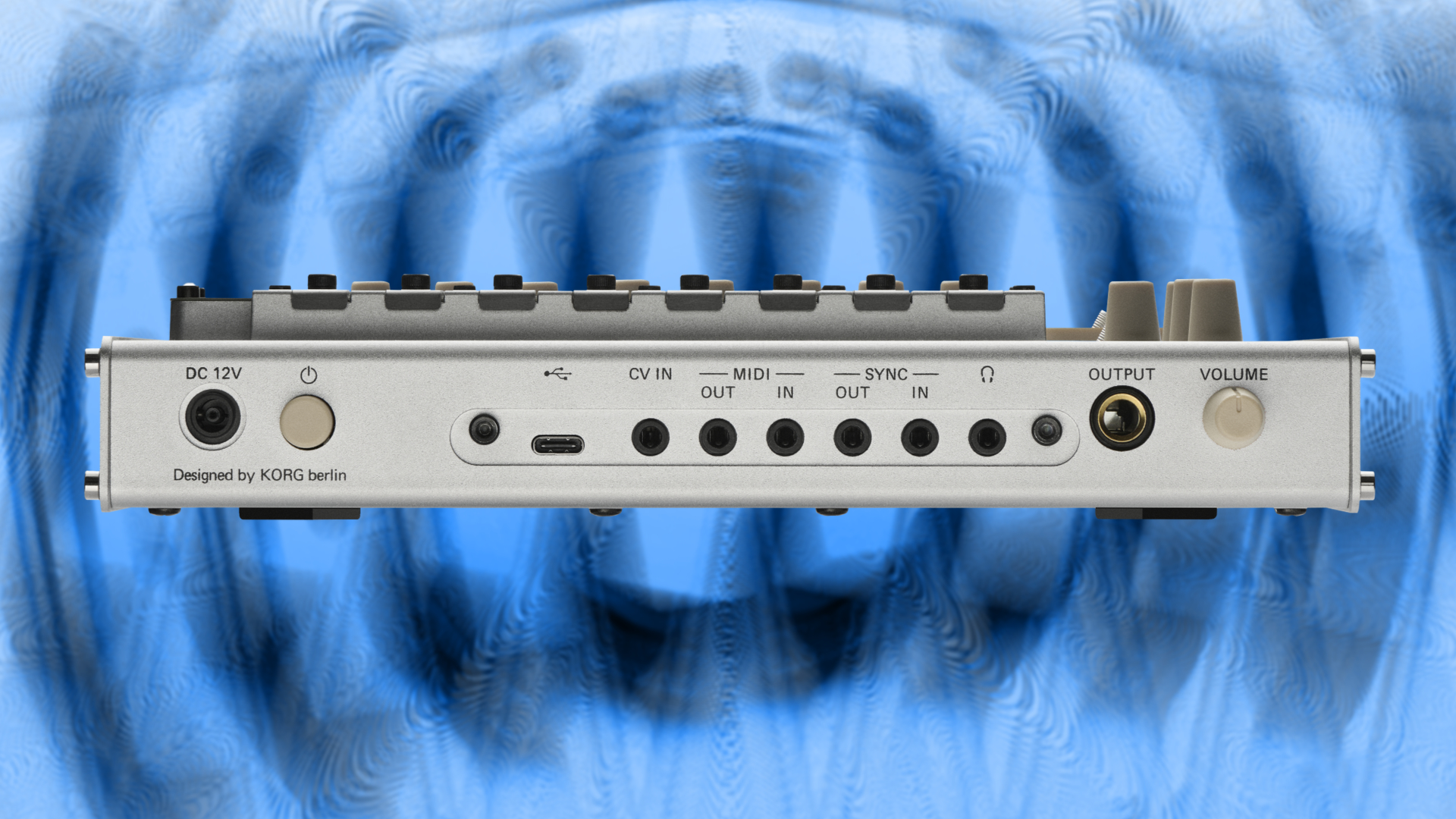
External MIDI devices can trigger notes in the acoustic synth, and the sequencer can trigger notes in external MIDI instruments via USB-MIDI.
On the audio side, it has a 6.3mm line-level output and a 3.5mm headphone jack. There is also a dedicated volume knob and an ON/OFF button. It ships with a DC 12 power supply
Korg phase8 First Impression
It’s innovative, fresh, original, and experimental. It’s a Synthesizer that blends acoustics with synthesis like no other before. It makes electronic music tangible. The interface looks very appealing and encourages direct experimentation.
I’m very curious about the first demos and how they turn out. One has to see how versatile phase8’s sound is and how well it integrates into music productions.
I hope I will also get the opportunity to test phase8. For me, the best news is that it’s now a real product and not just a study or a prototype.
Korg phase8 will be available in Q1 2026 for $1149/969€. You can pre-order it now at retailers or use the phase8 link below to register with your email address and get notified when the pre-sale starts at the official Korg Berlin website.
More information here: Korg or Phase8 page
Available from my partners



The most excessive kalimba in the world… 😀
A little bit like the Meng Qi Wingie.
yeah.guess Hans will buy a few for his Zimmer. 😎
They had me until $1200…
Same here.
However it made me considering a simple electric kalimba now!
Good ones are ~ 100€/$
Interesting but I am not sure the pallet of sounds you can get equals the price you pay.
Would need to hear much more.
We could rock that thing. How to buy?
links are in the article