
NAMM 2026: Akai MPC XL is the new flagship model of its standalone MPC series with more power, memory, hands-on control, and more.
Perhaps the worst-kept secret of the past few weeks was the new Akai MPC XL. It was so obvious that it would be unveiled at NAMM 2026.
After numerous leaks in recent weeks, it’s now official. Ahead of NAMM 2026, Akai has released the MPC XL, and it’s available immediately.
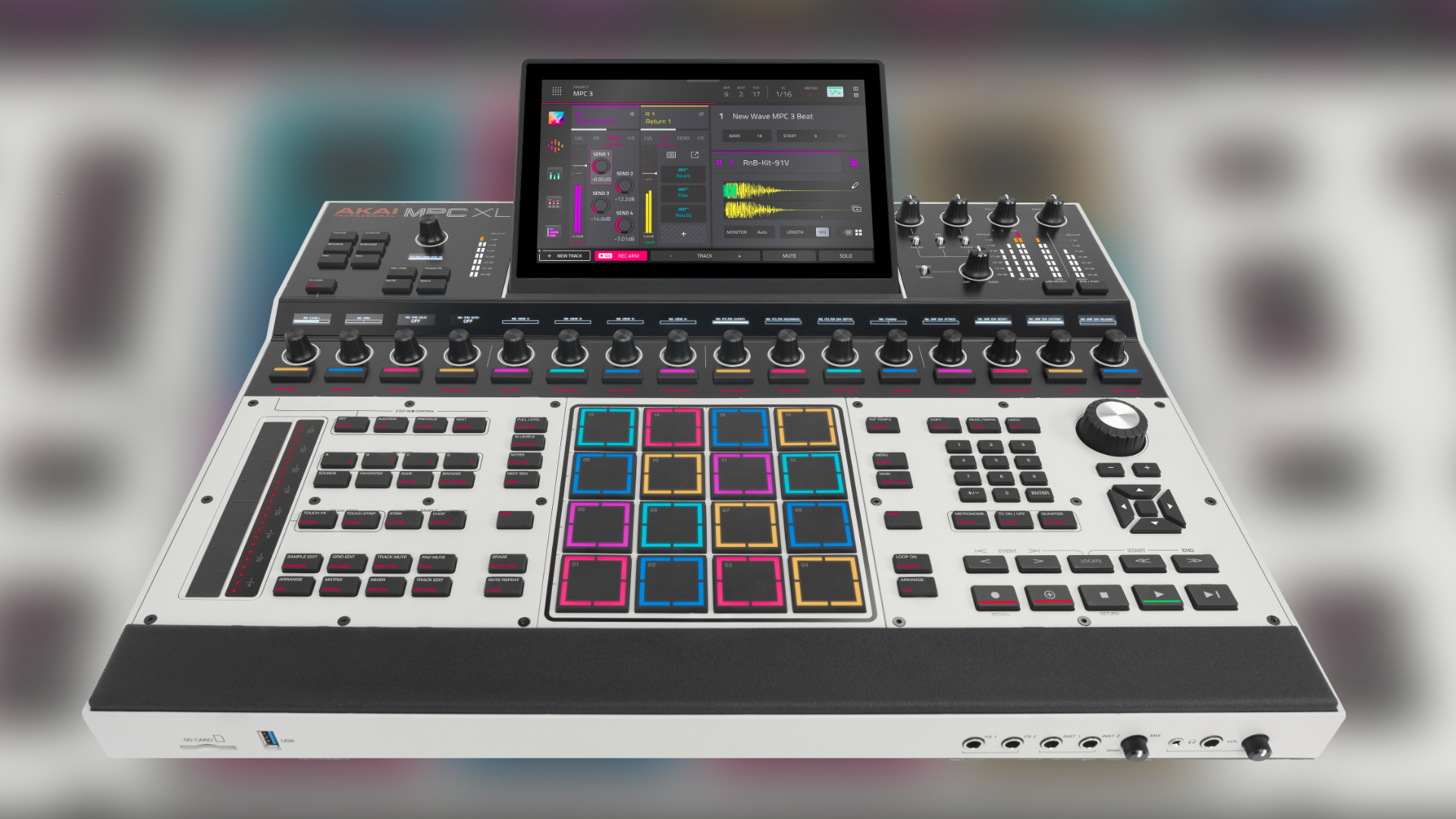
Akai MPC XL
The MPC XL is the new flagship model of the standalone Akai MPC series, replacing the MPC X SE, which is being discontinued. It must have lived up to the name’ flagship,’ as the core has been boosted again compared to the MPC Live III, released back in October 2025.
The MPC XL houses a Gen 2 8-core processor with 4x the processing power of previous MPCs. Unlike the MPC Live III, the XL has 16GB of RAM instead of 8GB, giving you even more power for standalone music production.
According to Akai, you can load up to 32 plugin instruments and 16 audio tracks simultaneously, with support for up to 256 simultaneous voices. On top of that, you get a 256GB internal NVMe SSD storage with a SATA3 expansion bay for additional storage.
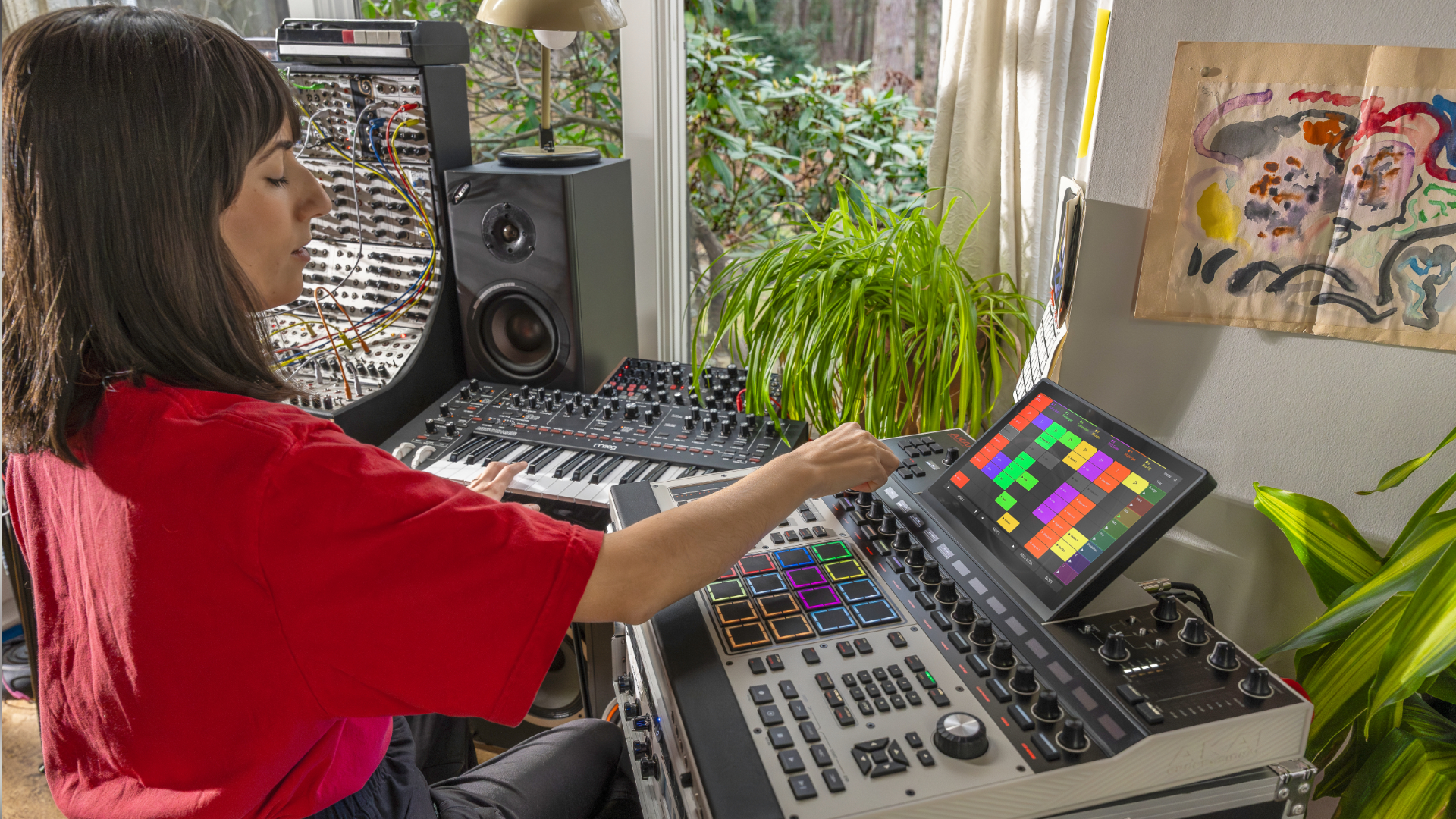
The XL also offers an XL display. It comes with a 10.1 HD multi-gesture touchscreen with tilt, providing real-time visual feedback. Since we’re already on the topic of displays.
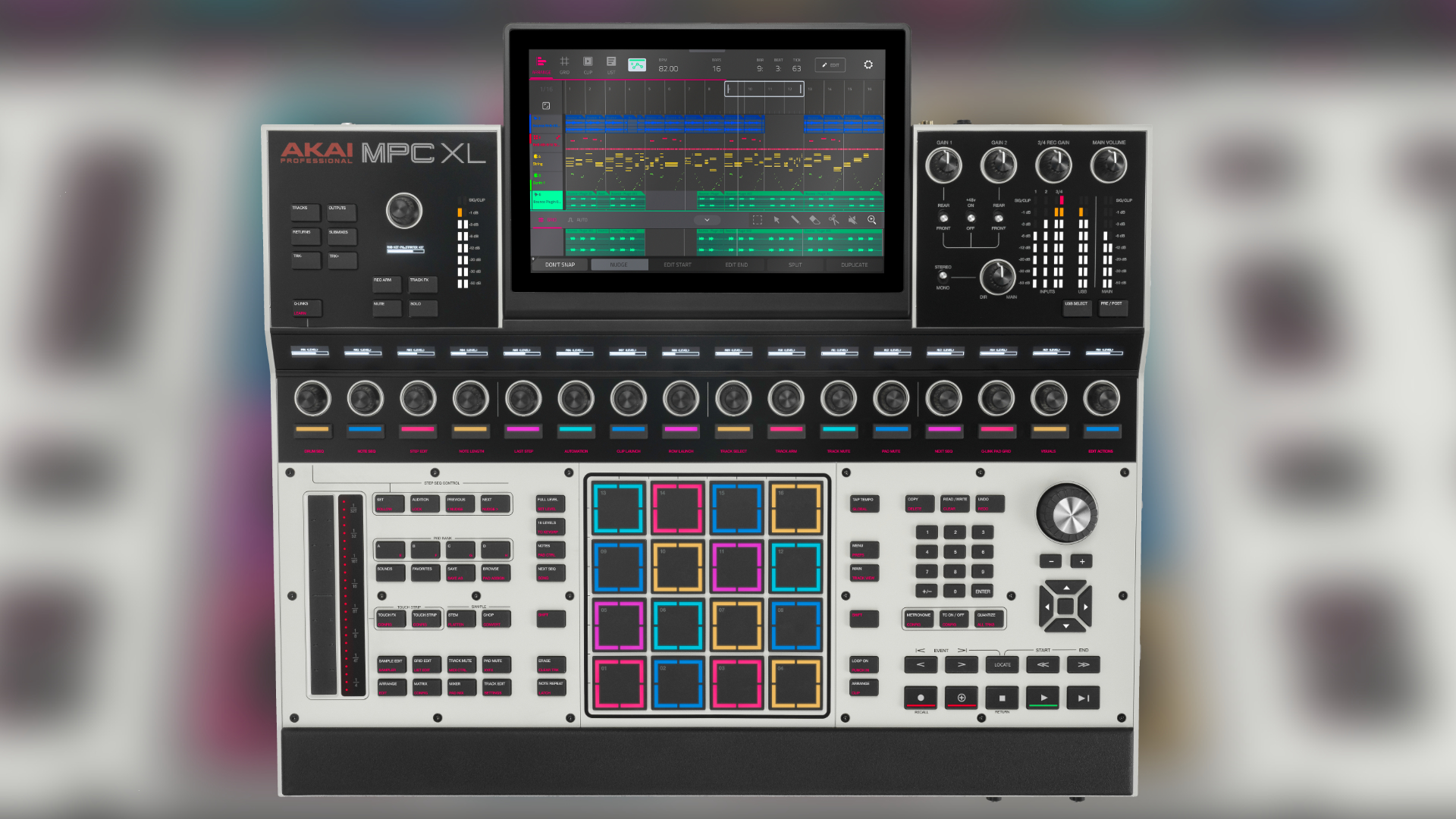
More or less in the center of the device, you can find 16 touch-responsive Q-Link knobs with OLED displays for instant visual feedback. They are no longer arranged in four rows on the left side, but are now arranged in a single row.
Just below the Q-Link buttons is the dedicated step sequencer introduced with the MPC Live III, featuring 16 RGB function buttons.
3D MPC Pads, Touch Strip & More
With the MPC Live III, Akai introduced the new, ultra-responsive MPC pads with 3D-sensing technology. Yes, these 16 innovative pads are also part of the new MPC XL.
With four quadrants per pad, producers can morph, loop, layer, and control sounds and effects freely, opening up new dimensions of creative possibility. It also features an assignable performance touch strip for tactile control of performance FX, note repeats, and channel faders.
In addition, there are numerous buttons, which have been further expanded. For example, there is a classic number pad. Maybe, in case of bugs, it’s possible to call the developer’s office directly from the MPC. That would be a serious service-level upgrade.
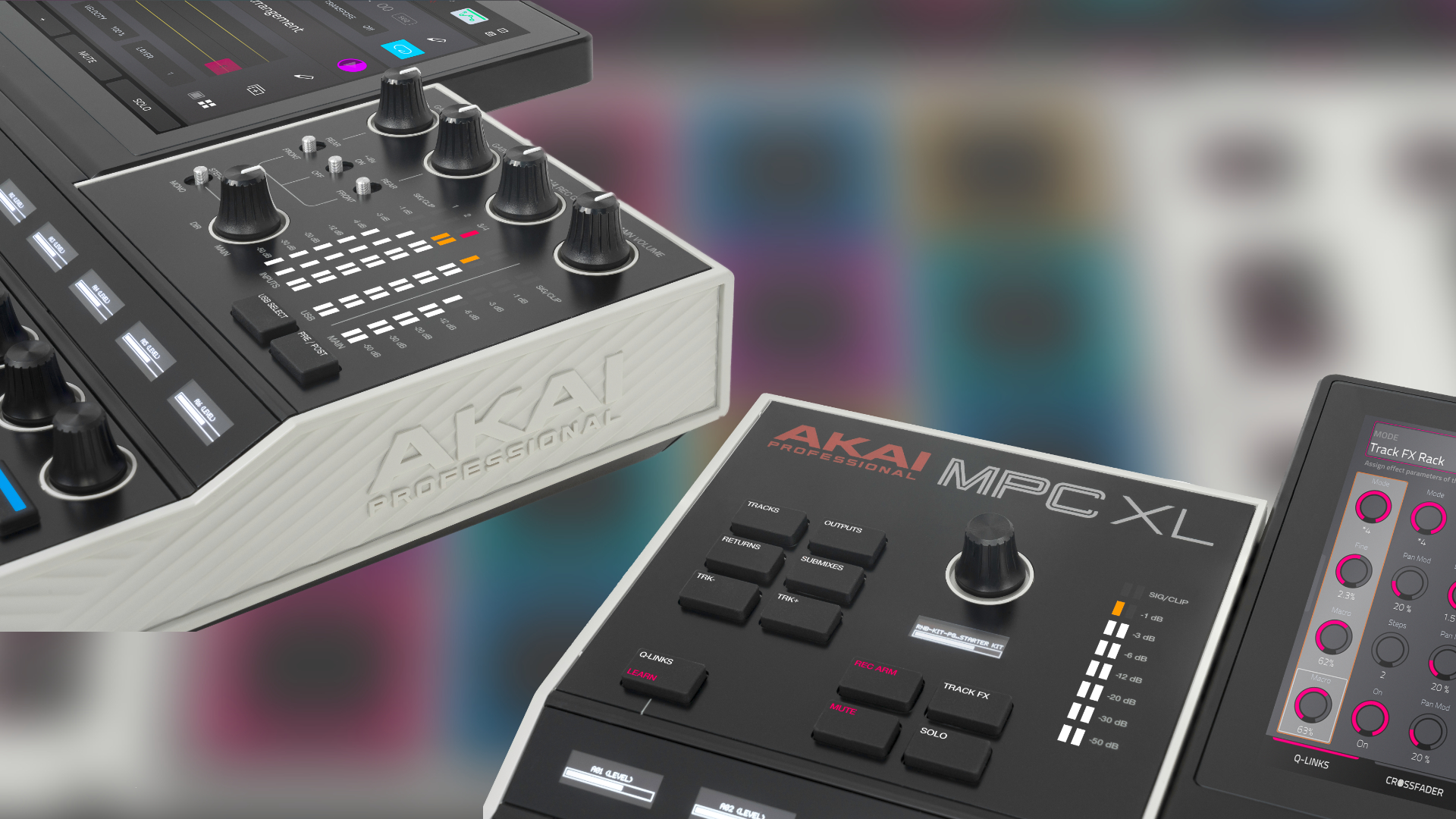
A new feature, exclusive to the MPC XL, is the upper section. It houses a new XL channel command for quick access to mixing and recording parameters with a dedicated OLED display and encoder.
On the right, it offers an audio interface command hub that lets you control the independent input levels and the main volume. Neat, colored VU meters give you real-time visual feedback of the signals.
Connectivity
XL is also the backside of the new Akai MPC XL and is designed to serve as the hub of any studio setup.
On the back side, you’ll find two combo jacks with professional-grade mic preamps and phantom power to capture vocals and acoustic instruments.
Next to these are dedicated instrument inputs that handle guitars and basses, while phono inputs connect turntables for direct sampling. Eight separate outputs enable complex routing to external gear or multitrack recording into a DAW. That’s two more than on the MPC Live 3.
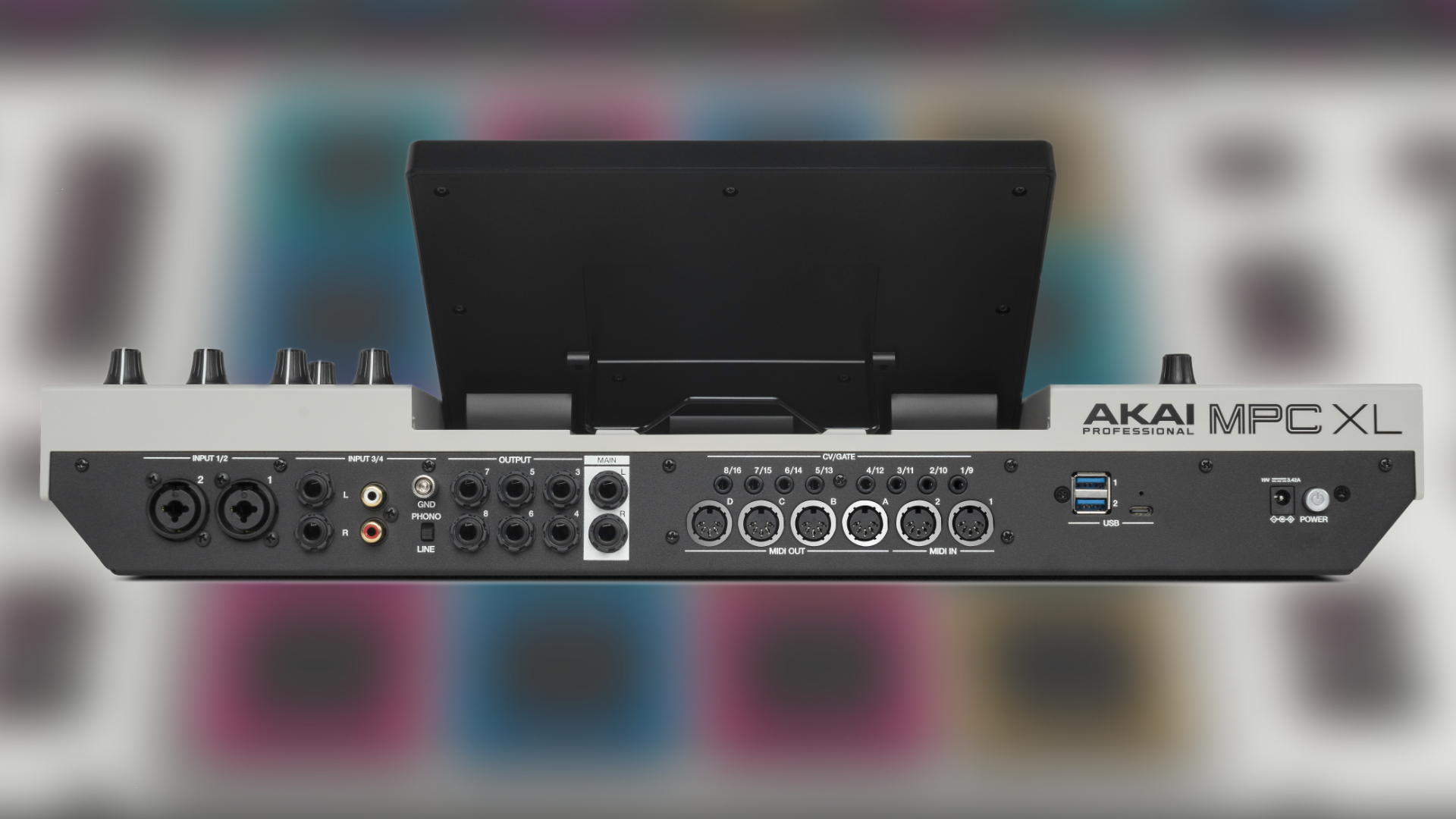
There are also more MIDI and CV ports. It houses two 5-pin MIDI inputs and four MIDI outputs that support up to 32 channels, as well as 16 CV/gate outputs, transforming the MPC XL into a command center for entire hardware ecosystems.
In addition, you can find USB-C connectivity for MIDI and audio interface duties with up to 24 channels, as well as three USB hub ports (2x on the back + 1x on the front). The backside ends with a power supply input with a dedicated button.
On the front panel, it also houses an SD card reader, four line inputs (two inputs), and two headphone sockets, one with a 3.5mm jack and the other with a 6.3mm jack.
Software
The software core is the current MPC 3 software, which includes all the features added in recent months, including pro STEM separation. time-stretching, clip launching, and more.
The MPC XL comes production-ready with an extensive collection of plugins, samples, and effects. Right out of the box, it includes the Native Instruments MPC Edition Play Series Analog Dreams and the Lone Forest Expansion, giving producers immediate access to professional-grade sounds and processing tools.
It comes with the MPC Pro pack that features studio-grade time-stretch, clip-launching, expanded CV control, and new pro plugins.
Plus, it ships with the plugins: Fabric XL, Fabric, Fabric Piano, Fabric Electric, OPx4, Studio Strings, Organ, Hype, Tubesynth, Odyssey, Solina, Mellotron, Drumsynth, Bassling, Electric.
Akai MPC XL First Impression
The MPC Live III gave the MPC standalone ecosystem a massive boost. The MPC XL takes this even further, making it the most powerful MPC ever made.
Anyone looking for the most powerful and fastest MPC system, one that also boasts the most hardware controls, simply cannot ignore this XL flagship. With the MPC XL, Akai once again underscores its ambitions for the MPC platform. It’s an impressive hardware groove workstation, but it also comes with a hefty price tag.
The Akai MPC XL is available now for $2899 USD, 2799,99€, and £2499,99 through authorized dealers and select music retailers worldwide.
More information here: Akai
Available from my partner
So big ! 🙂
That is so damn big. It literally would not fit on my desk. 🙂 I did get a Live 3, and it is fantastic to work with.
I think you either like this way of working or not.
Two missing features I’d say on the hardware side, detachable touch screen that you could use as a controller, when you edit with…and a hdmi socket so you can have a 90” screen.
So maybe not the ultimate yet!
I sold my MPC X about six months ago in the expectation that this would come after the rumours of Live 3. However I am not enamoured. After connectivity the biggest plus of the MPC X for me was not the larger screen but the 16 Q-Links arranged in the most obvious fashion to match what was on the screen (which meant I rarely needed to reach for the screen and workflow was tight), alongside the f-keys under the screen (for a similar reason). Both things which have unceremoniously been dumped from the XL. In addition the software is still missing a lot of functionality I used that was present in 2.x, meaning that this is a huge miss for me. – I’ll still be looking for an MPC again – but I suspect that now a live 3 will be good enough once they sort their software issues out as these horizontal Q-Links are going to mean that I end up using screen more anyway I think…
Agreed. Form factor of the MPC X is great. The Q links specifically. This seems a good 25% larger. Too much and really pushing for the VSTi and soft synth crowd which the opposite direction of the MPC ethos of yesterday
I have a ONE
I have an X
I have an MPC Key 37
My laptop is a monster I built myself it’s an i9 with a 15 inch 4K twin drives, touchscreen, 64GB RAM And the latest MPC DAW.
Moving around my flat is basically LARPing Tetris sponsored by AKAI
No more please. 🤣👍
These days you have to be rich to buy equipment to write complicated songs about being poor on. 😁👍