
DWP-Plugin Nexora is a new multi-track glitch multi-FX processor plugin for macOS and Windows with 20 effects, recording, and more.
At the beginning of the year, I reported on the new software company DWP-Plugin and its first plugin, DWP-16, a multi-channel sampler with FM synthesis and glitch.
Just before the new year, the developers are showcasing their second plugin, and it’s again about glitches. DWP-Plugin Nexora is a new, powerful multi-FX plugin, focusing on glitched sounds.

DWP-Plugin Nexora
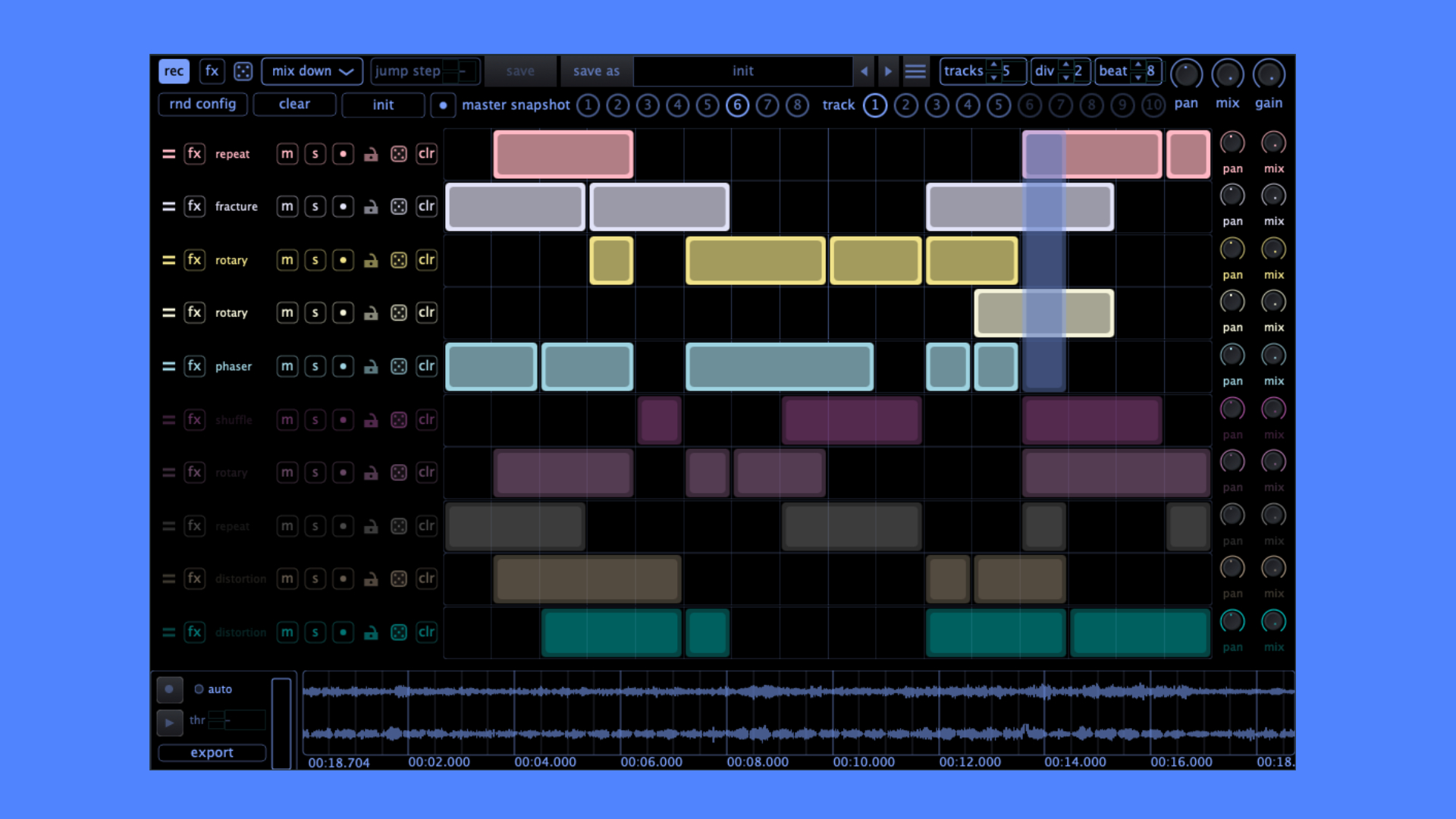
Nexora is a new sequenceable multi-FX plugin for macOS and Windows built around a performance-oriented glitch grid, where each row acts as an independent FX track. The concept is reminiscent of plugins such as Effectrix 2, Glitch 2, and Infiltrator.
DWP-Plugin Nexora features 10 independent tracks, each capable of hosting up to four effects. Yes, not just one effect per track, but four. This makes the whole thing even more creative, more unpredictable, and more wild.
Twenty creative effects processors are available: bitcrusher, chorus, comb filter, distortion, delay, flanger, filter, fracture (grain), gate, phaser, pan, pitch drop, repeat, reverb, ringmod, rotary speaker, shuffle, step filter, and stretcher.
Each is a fully featured effects processor and is customizable. For example, the granular processor “fracture” offers controls over the mix, length, grain, shuffle, reverse, spray, pitch, xfade, and more.
Sequencer FX + Snapshots
Like other sequencer multi-FX, you can draw patterns on the grid, and different effects are triggered depending on the patterns. This sequence then slices, glitches, modulates, and reshapes your audio in sync with your DAW BPM.
Drawing is very flexible. The grid supports up to eight divisions and eight beats, giving you a total of 64 steps spanning two bars.
Additionally, you can use the following playback modes: parallel, sequential, random step, random track, selected track, and mixdown.
Every effect on every track supports up to 8 snapshots, so each pattern on the grid can recall its own unique parameter set. This opens the door for very sophisticated, evolving sound transformations.
A dedicated snapshot edit mode lets you quickly and musically fine-tune all FX parameters. The snapshots are also part of the sequencer.
DWP-Plugin Nexora offers manual snapshot switching on the master channel, enabling you to switch between master snapshots instantly during playback. This makes it easy to perform dramatic transitions, build drops, and reshape the entire FX structure in real time.
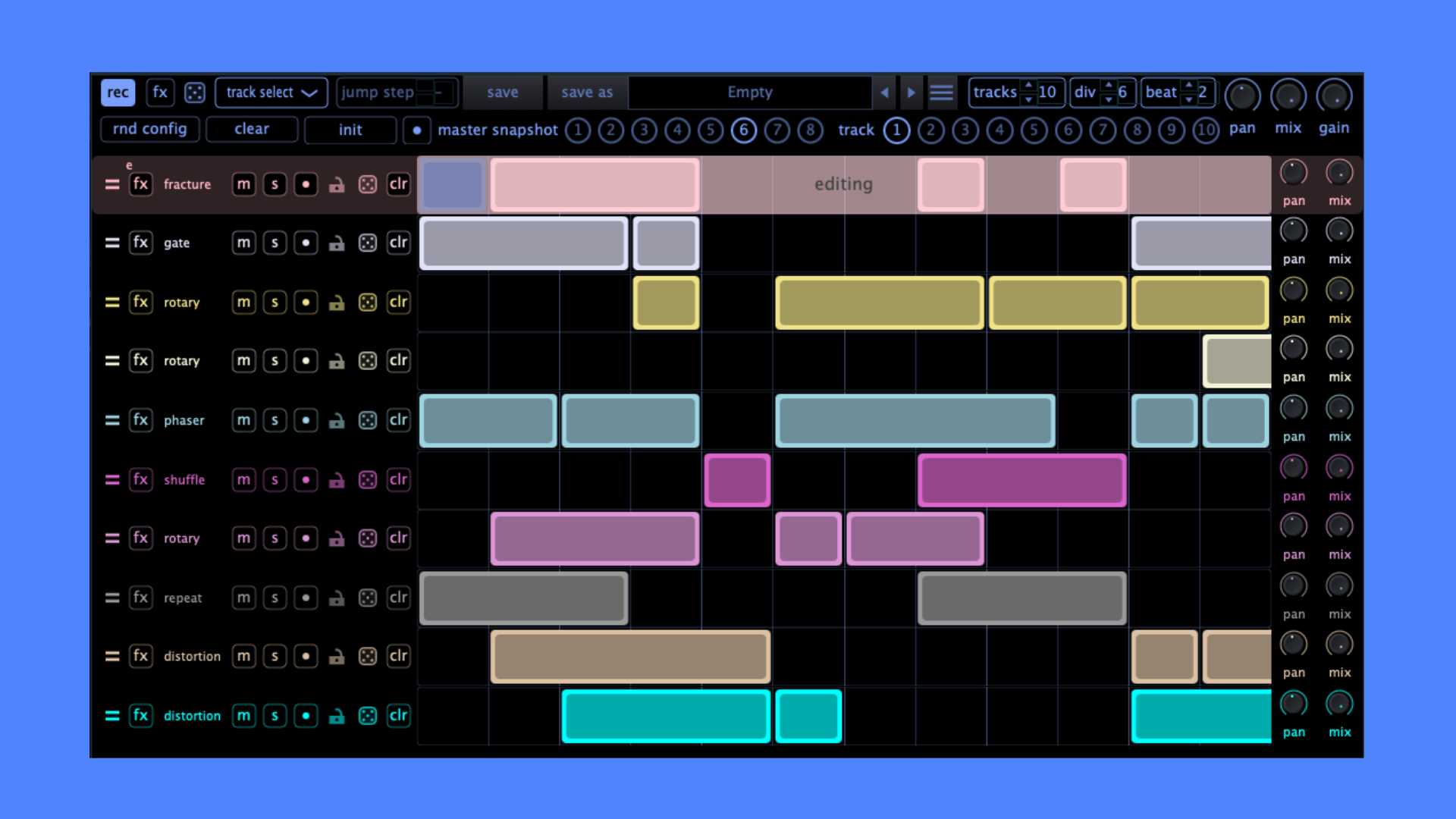
Randomization, Per-Track Mixing, and Recording
If that’s too much to start with, you can also use the built-in intelligent randomization engine to create instant new results. You can use randomizers at both global and per-track levels.
Each track also includes random buttons for patterns and FX (including optional snapshot randomization), making it easy to discover new ideas in seconds.
To avoid a maximum-sound porridge, DWP-Plugin has built a flexible per-track mixer with panning into Nexora. Plus, you get a global mix and pan on the master.
In addition to the track FX, a dedicated master FX section provides up to 4 effects that are not randomized, ideal for final glue and polish. The recorder located at the end of the signal path is convenient. It offers two modes: manual or auto-mode with a threshold.
It captures the plugin’s output, and once complete, you can drag the recording directly into your DAW or save it as an audio file.
DWP-Plugin Nexora First Impression
There are already many sequencing multi-effects plugins. One of my favorites is Infiltrator. How Nexora performs would have to be seen in a test, as much depends on the quality of the effects.
On paper, the plugin looks very promising. It offers numerous customizable effects, a flexible sequencer, and a built-in recorder that is highly useful. Also, it is very fair priced.
DWP-Plugin Nexora is available now for $49. It runs as a VST3, AU, and AAX plugin on macOS (native Apple Silicon + Intel) and Windows.
More information here: DWP-Plugin


Thanks so much for taking the time to write this — it’s incredibly accurate and you captured Nexora’s workflow perfectly (grid sequencing, play modes, per-effect snapshots, randomization, mixer, master FX and the recorder/resampling flow). I really appreciate the thoughtful breakdown.
Totally fair point about the real test being the sound/quality of the effects — if you end up doing a deeper test, I’d love to hear your impressions and any suggestions for improvements. Thanks again! 🙏