
Discover the best hardware experimental Synthesizer releases of 2025, including drone machines, fascinating noise boxes, and more.
Every year, numerous synthesizers are launched. Many are modeled after vintage synthesizers and aim to replicate the entire engine or specific elements, such as oscillators or filters. However, a small portion of the total releases differs.
These are hardware instruments, also known as experimental synthesizers, that often feature new concepts, sonic options, designs, and more. As in previous years, just before the turn of the year, I unveil my selection of the best experimental hardware Synthesizer releases.

Best hardware experimental Synthesizer releases 2025
This series highlights small developers who, with limited budgets, introduce their uniquely strange synthesizers or noise machines into a very competitive market. This year marks the sixth installment in the series, and I hope it’s not the last. Here are the articles from the previous years: 2020, 2021, 2022, 2023, and 2024.
The order of the mentioned experimental synths or noise-making machines doesn’t mean anything. This is not a ranking or a battle to see who has the best one. A synth that is #4 or #9 doesn’t mean it’s better or worse. I listed them in random order and left it to you to choose which instrument you preferred.
Important: the choice is strictly personal. It’s not the definitive list; everyone can make a different choice. I’m creating this special “best of” list primarily to bring smaller developers back into the spotlight and thank them for their work.
Compared with last year, more experimental synthesizers were released this year, making the selection process more challenging. I did my best to put together the best of this year.
Let’s pick up where the 2024 edition left off. A reader suggested including the KOMA Elektronik & Passepartout Duo Chromaplane here. I agreed, but excluded it because it hadn’t been shipped in 2024. That has now changed. The Chromaplane has been available since the beginning of this year and is therefore now part of this list.
KOMA Elektronik Chromaplane
When it comes to originality, this experimental synth from 2025 scores full marks. Chromaplane is an analog polyphonic Synthesizer like no other. It’s an instrument that generates continuous electromagnetic fields, which become audible through your multi-dimensional playing. That’s what makes Chromaplane so special.
The musician holds two electromagnetic pickup coils in their hand and moves them over the instrument’s surface. These two make the electromagnetic fields audible. The sound of the instrument is determined solely by how you move them across the surface.

Factors such as speed or how you move or swing the coils play a crucial role, as different movements produce different sounds. This enables highly expressive two-handed polyphonic playing.
The sound range isn’t extensive, but by adding effects pedals or other gear, you can create exciting timbres.
CROWS Electromusic Lore
I am a fan of classic, almost banal drone synthesizers that offer very little but are a lot of fun, especially in combination with effects pedals. The CROWS Electromusic Lore is one of these and made it onto the list.
Lore is an FM drone Synthesizer with two independently controlled triangle-core oscillators and controls for volume, pitch, and a waveform crossfading option. A key feature is the ability to create FM between the oscillators, yielding harmonic-rich or dissonant sounds we love from FM synthesis.

You’re probably thinking, “What’s so special about two oscillators with FM?” Not much is true. It’s the simplicity and immediate play that make it so appealing.
No need to read the manual, no menu diving, no endless key combinations… switch off your brain, grab the faders/knobs, and the drone party begins.
Tilde Instruments Röntgen
Developers come and go every year. One that took off in 2025 was the German developer Florian Erdle, also known as Tilde Instruments. He released two hand-built synthesizers this year: the TouchDog and the Röntgen. I chose the Röntgen for this list.
Röntgen is a patchable experimental analog Synthesizer designed for improvisation and sonic exploration. It comprises three sections: two voices, each with two oscillators, wavefolding, FM, and decay envelopes; two shift-register-based sequencers; and a stereo delay that refines the signals.
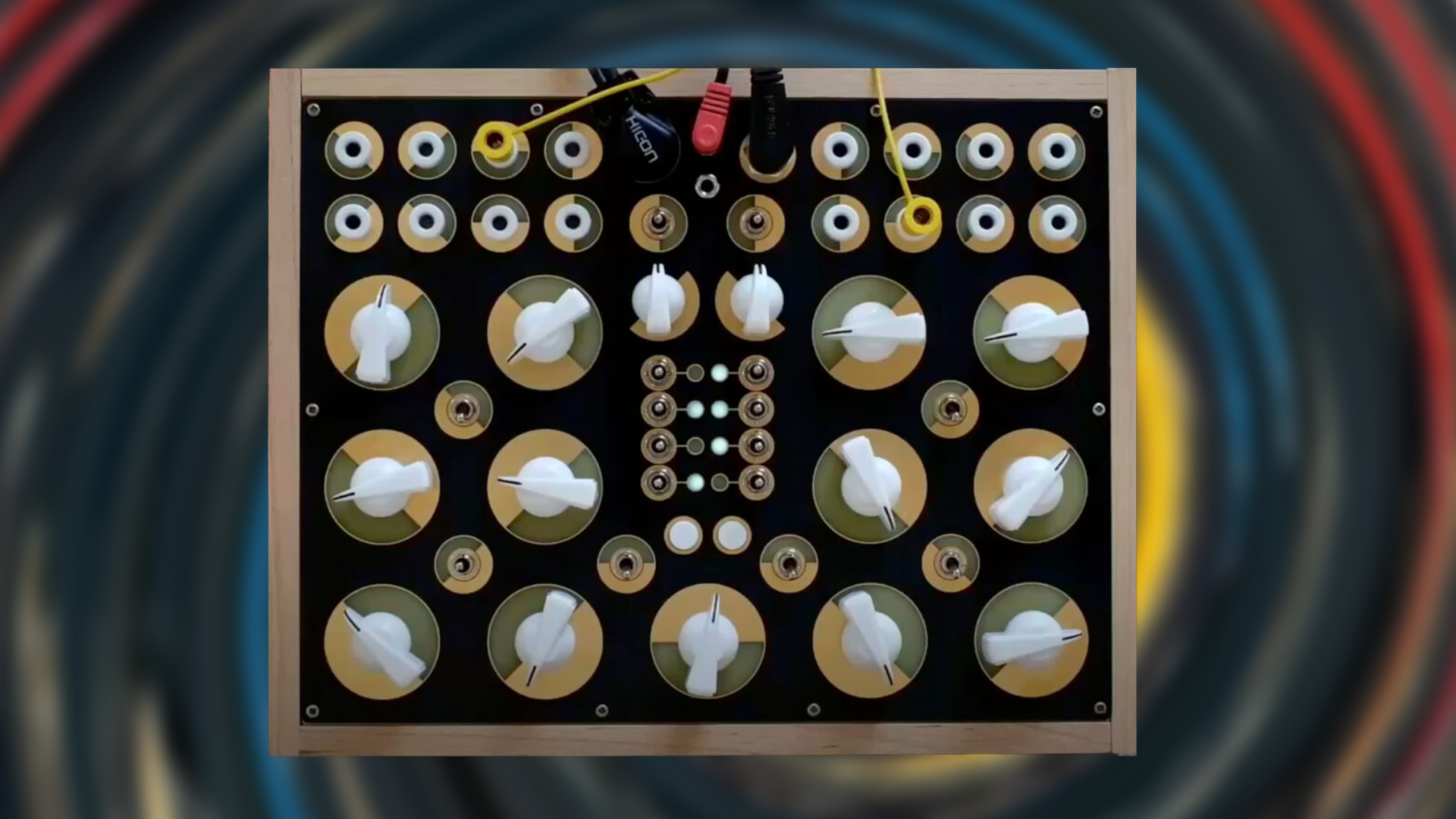
The feature set is rather classic and West Coast. MIDI is absent. Numerous large knobs are available for real-time interaction with the analog engine. Banana sockets enable you to break the internal connection and steer the engine in a new direction.
In my opinion, the decision to forgo MIDI makes a significant difference in the Röntgen, enabling a different approach to the analog synth and resulting in more explorative, experimental sonic outcomes. A fascinating instrument that derives much of its charm from its beautiful appearance.
Synthux Academy Simple Touch 2
Last year, I included the Synthux Academy Audrey II feedback drone synth on the list of the best hardware experimental Synthesizer releases. Another project made it this year. No, unfortunately, not the Spotykach Looper, as shipping hasn’t started yet. However, the Simple Touch 2 was made on it, although it’s not an explicit 2025 release.
I gave it a go because it received the Audrey II firmware just before the end of the year, turning it into a drone-feedback synth as well.
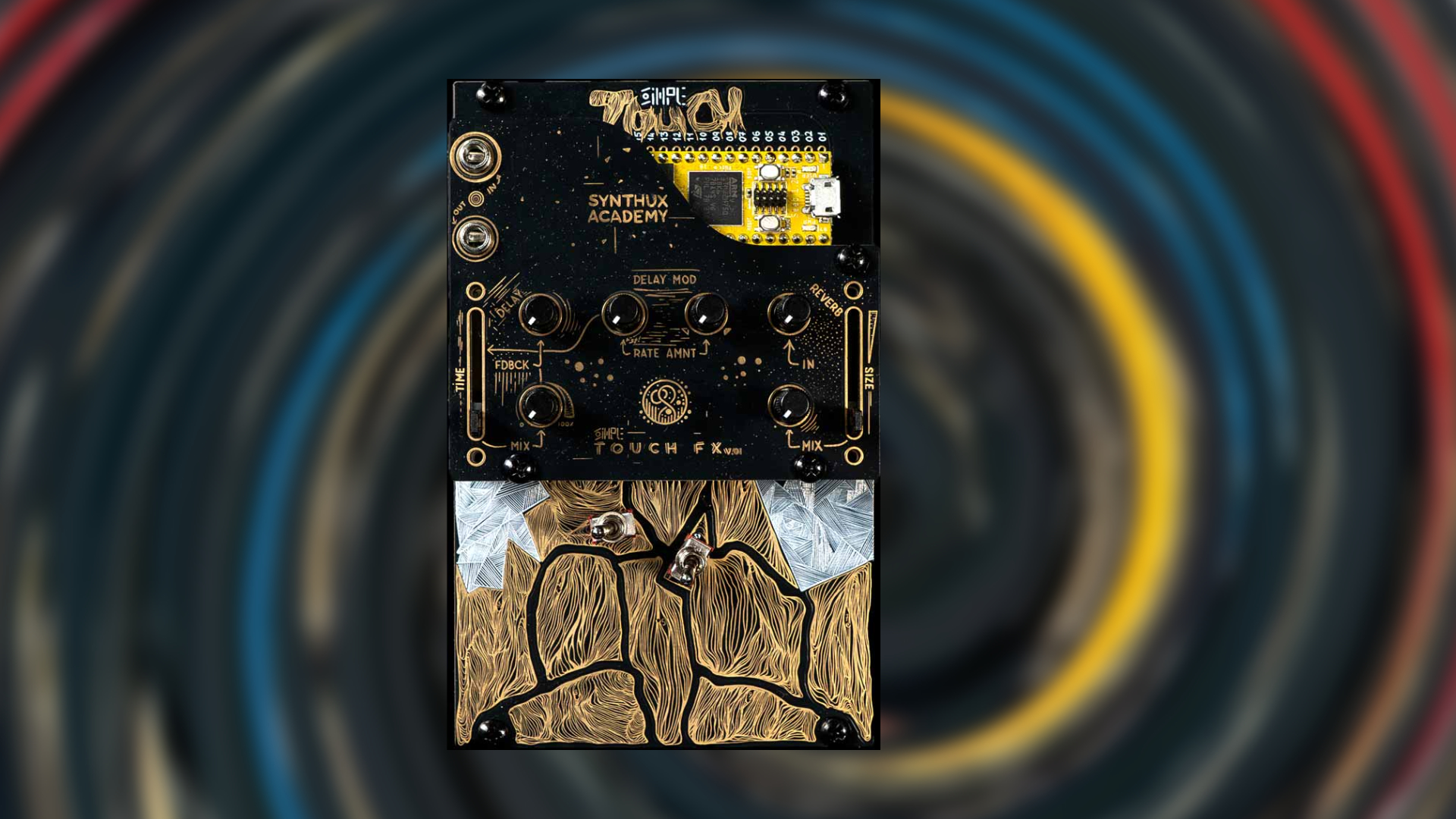
As a reminder, the Touch 2 is an open-source Daisy Seed-powered tactile Synthesizer with swappable firmware. A wide range of alternative firmware is available, allowing the Touch 2 to function as a digital synth with distinct engines or as an exciting multi-FX processor with touch functionality.
As its name suggests, it’s playable with touch gestures, and these strongly influence the sound. You can play it classically in a chromatic way or experimentally, which can make it very noisy. It’s certainly noisiest and weirdest with the loaded Audrey II firmware.
The Simple Touch 2 is a fabulous project that deserves more attention. I hope there will be more alternative firmware for the synth, and please experimental ones like the Audrey II.
Instruo Pocket Scion
Do synths always have to be played by humans? This year, the Instruo Pocket Scion provided a clear answer to that question. No, plants and mushrooms can play them too.
The small, cigarette-box-shaped tool is a colorful, multi-voice Synthesizer that your plants and mushrooms can control.

It captures biofeedback data sourced from contact with living organisms. A flexible, tweakable, multi-engine translates this data into generative evolving, non-stopping soundscapes.
The Instruo developers have taken this a step further by enabling the internal engine to output data as MIDI/OSC data, which can then be forwarded to other synthesizers.
A fascinating instrument that expands music with another playing actor: humans, machines, and even plants. I hope a device will be released in 2026 that allows dogs and cats to operate synthesizers as well.
Clank Uranograph
Now and then, one gets the feeling that extraterrestrials do live among us, especially when looking at some instrument designs. This thought came to me when Clank introduced the Uranograph at the beginning of the year. It’s like a harp that flew through the stargate and arrived in a bizarre dimension, then made its way back to the developers’ console.
It’s not just the visuals that pique interest; the concept is compelling as well: Uranograph is a highly expressive Synthesizer powered by an original additive, phase-morphing engine focused on microtonality. It also offers a built-in looper, allowing you to capture sounds in tape-like fashion with instant overdubbing.

The instrument can be played via high-resolution touchpads that produce continuous, organic sound variation, giving you a playing experience more like a stringed or wind instrument than a Synthesizer. Uranograph is an alternative to Soma Terra, offering far more interaction options through its additional knobs and sliders.
However, the sound qualities differ significantly. Drones, textures, or noise are also possible, but so are more elegant, glassy sounds. Definitely experimental, not only in the sound but also in how musicians can interact with the instrument. Or as an officer of a famous spaceship once said: Fascinating!
Manifold Research Centre Antilope
An oscillator, a sample, or noise are, in most cases, the basis for an electronic sound. There are other, more unusual ways, as demonstrated by the Manifold Research Centre Antilope Synthesizer.
The distinctive-looking Synthesizer is based on dual pingeable resonant filters that produce a wide range of plucks, bong slaps, and ghastly squeals.

This year, Loess Labs also released a similar conceptual synth with Quad Cree, which I decided against because I find the Antilope more attractive in terms of features and sonically.
Among other features, the Antilope offers a multi-FX distortion feedback path and a creative three-channel pattern recorder, allowing users to immerse themselves in beautifully distorted rhythmic structures. If a DFAM is too tame for you, you might find what you’re looking for here. Noisy, harsh, shrill, or simply a bag full of sonic fury, that’s the Antilope Synthesizer.
TINRS x Error Instruments kHarper
Every year, with my “Best Hardware Experimental Synthesizer” article, I try to cover a wide range of wonderful, unusual instruments, and this example shows just how diverse they can be, even in 2025. Kharper is the latest lovely instrument/module resulting from another collaboration between the Dutch developers at This Is Not Rocket Science (TINRS) and Error Instruments.
Khaper is a fun, electronic touch harp for Eurorack. It’s not Emily Hopkins for your modular system. Khaper may appear unremarkable at first glance, but it offers a lot in a small space. Inspired by an acoustic harp, it features four strings, each built from two touch strips with an LED bar in the middle. Behind each string lies one of nine (3×3) selectable Karplus Strong/physical modeling-based synth engines.
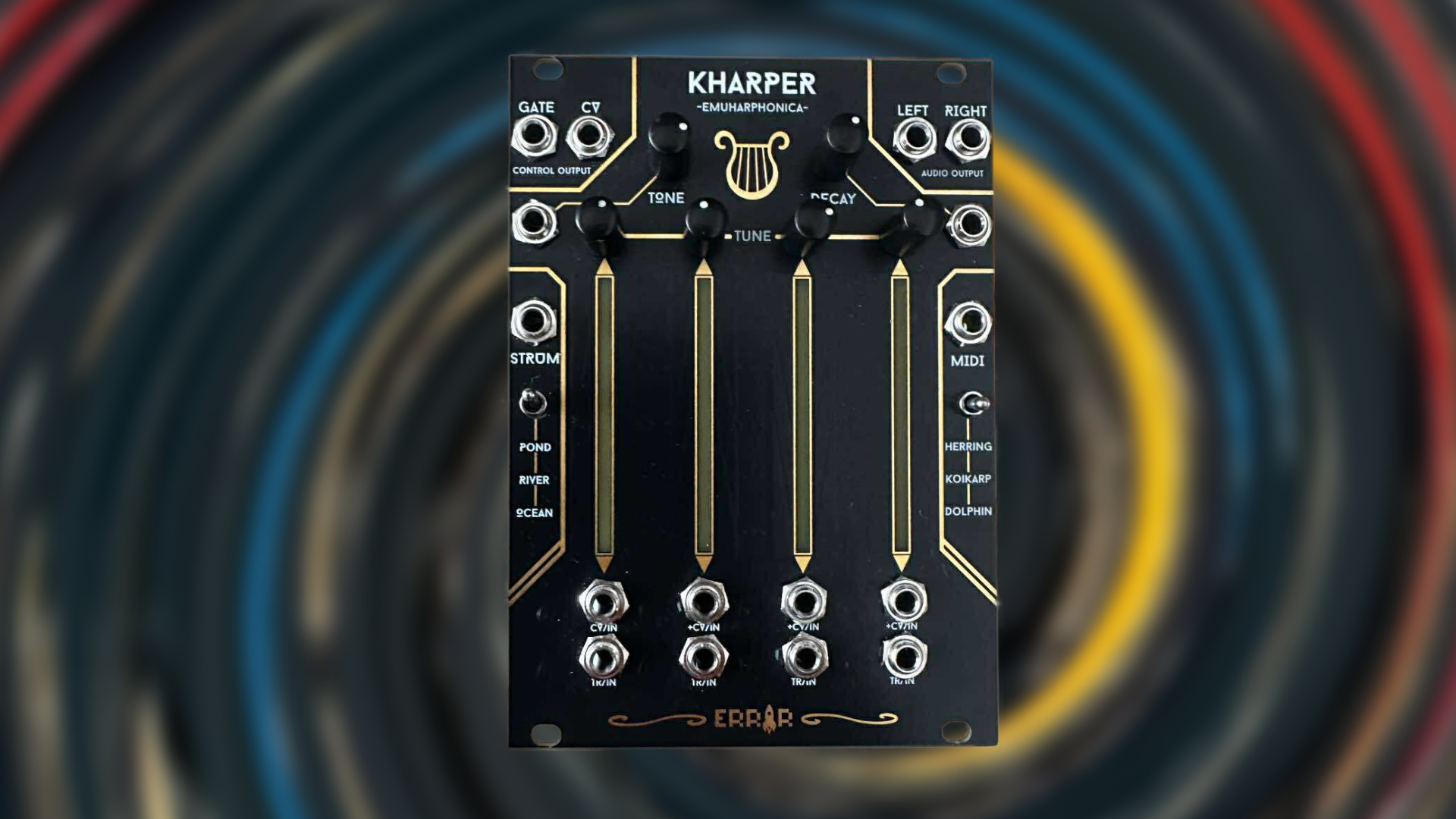
The voices can be played by touching the individual strings, and the results vary greatly depending on how you interact with them. This can range from organic, gentle sounds to noisy drones with feedback. Alternatively, you can trigger the voice individually using external CVs, perfect for sequenced harpy adventures.
Yes, it is a Paul Tas Error instrument, so the Kharper can also become a wild, experimental beast. Where a classical harp makes sounds for fables, Error Instruments’ TIRS Harper is the harp for the dark, dystopian parallel world.
Destiny Plus Model-Q-2
Anyone who found the previous eight entries in the Best Hardware Experimental Synthesizer Releases 2025 too traditional and not experimental enough should consider this device. Destiny Plus was very active again this year, releasing several hardware boxes that literally make your mind explode. I opted to feature the small Model Q-2.
Model Q-2 is a unique experimental noise box/Synthesizer packed with exotic sound-generation technology that would require a PhD to understand its inner workings fully. It isn’t a traditional instrument; it’s original and so crazy that I’d almost have to create a new category that goes beyond “experimental.”
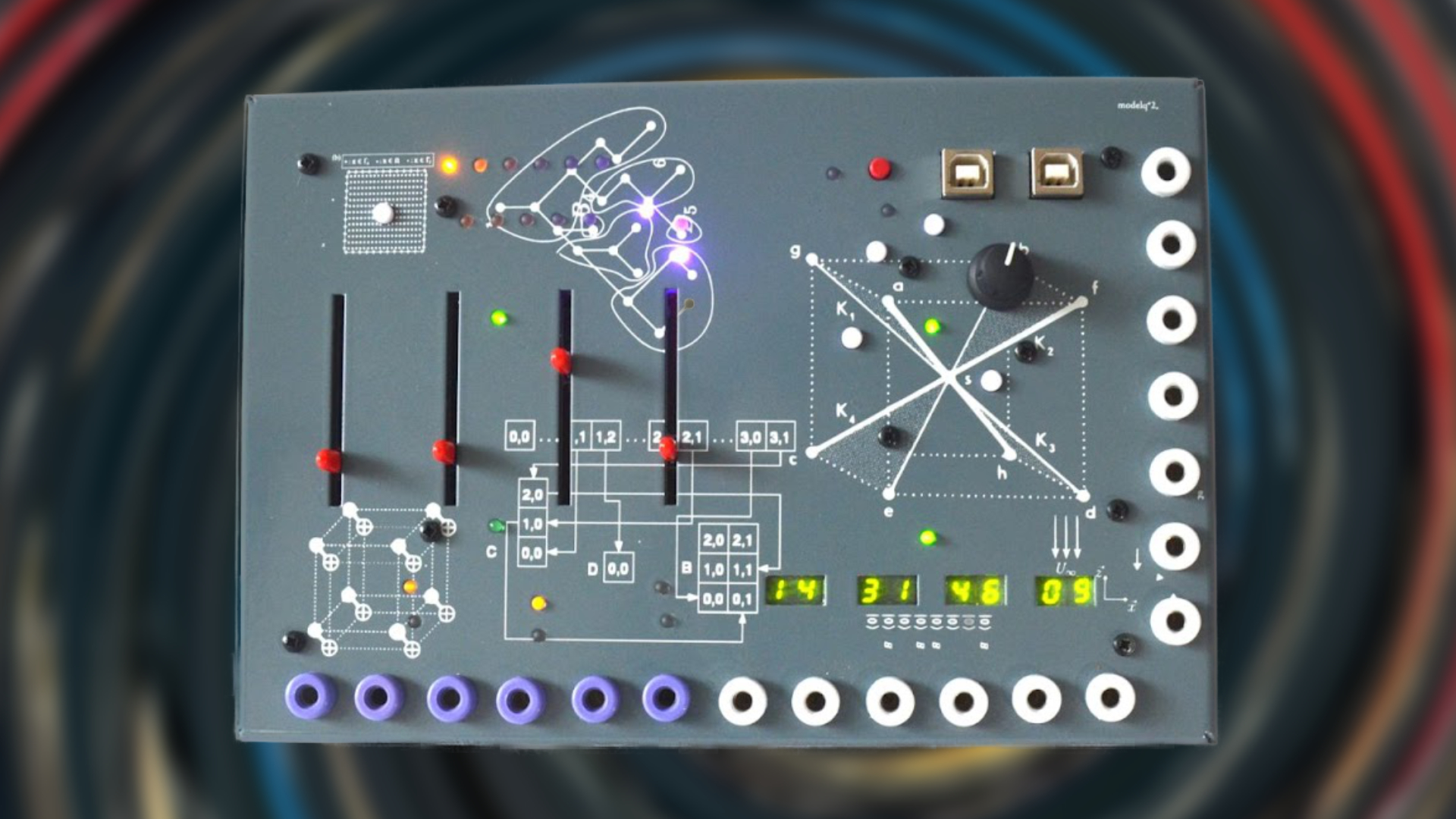
In short, it uses 10 core equations, eight phase oscillators, a Chebyshev polynomial waveshaper of the 2nd kind, a DSP matrix, and more to generate the sound. All of this can be patched with banana cables, and thanks to a dedicated app, you can control this chaos with gestures from all your fingers.
The sounds that come out are completely spaced out and give an impression of what it might sound like if a data center, isolated from humans, started making music on its own. Glitchy rhythms, crackling noisecapes, and much more. An instrument to visualize systematic chaos.
Make Noise NUSS (New Universal Synthesizer System
I spent a long time thinking about which synthesizers with an experimental feel amazed me this year. My interest in one thing grew throughout the year: the Make Noise NUSS (New Universal Synthesizer System). Initially, I was skeptical about what Make Noise would do after the fantastic Shared System, but as more modules were released, I discovered the system’s unique qualities.
Looking at the NUSS objectively, you see classic modules and a system. What’s so remarkable is the concept behind this system. With the NUSS, Tony Rolando and his team are seeking to redefine polyphony in Eurorack, but also taking Eurorack to the next generation. Instead of focusing on traditional note polyphony, they want to transfer polyphony to signal interactions.
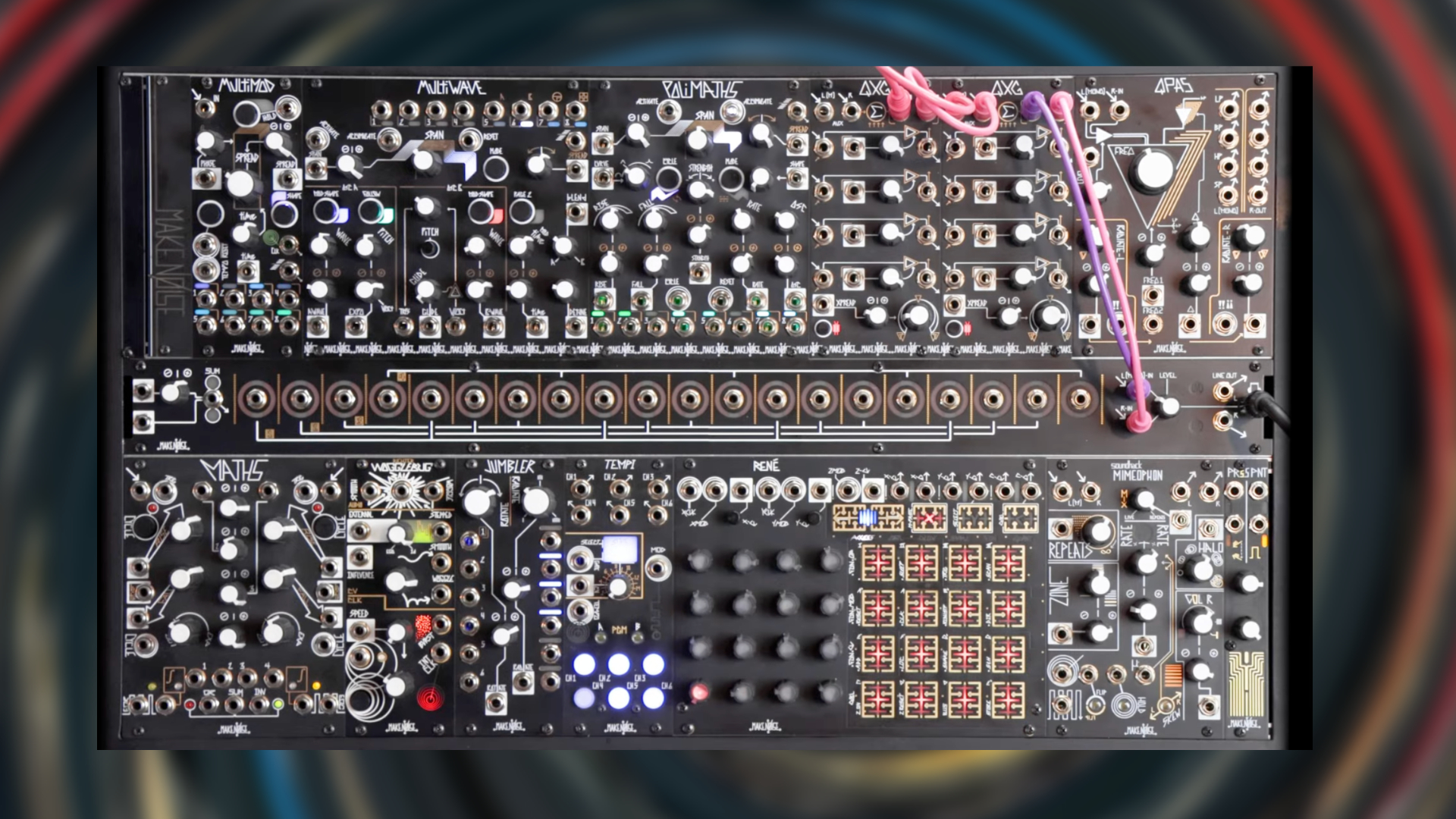
In practice, simple structures are used to generate multiple signals that interact and relate to one another musically in different ways. They also describe it as “from one comes many”. For example, the Multimod module generates eight distinct, highly flexible modulation signals from a single input. Samples apply to the Multiwave oscillator, which provides eight interacting yet independent voices.
The New Universal Synthesizer System isn’t exactly a highly experimental modular synth in terms of sound synthesis or design. Because it requires a rethink of patching, it prompts musicians to extensively experiment with the new technology and concepts to understand how the modules work together.
Experimental, not in the sense of sound generation/processing, but of signal patching and workflow. You could say it turns the analog Eurorack way of thinking on its head.
Best Hardware Experimental Synthesizer Releases 2025: Summary
Yes, that was 2025. This year, we’ve once again had the pleasure of discovering many original and unique synthesizers that you might not find in every traditional music store. As usual, many of these original releases have unfortunately flown under the radar of major synth communities.
I hope I was able to focus on some exciting new releases again, with the best hardware experimental Synthesizer releases 2025 for you.
I’m already looking forward to 2026 with more new synthesizers—especially the fresh and crazy ones from small developers. Until then, I wish you all a happy new year, and thank you very much for your support in 2023.
If you need one or more synths with crazy, out-of-this-world sounds, I’ve linked the lists from previous years below.
Best hardware experimental Synthesizer releases from the other years:
2024.

Great list, thanks. In terms of beauty I think we have two extremes as well. The Tilde Instruments Röntgen is gorgeous, whereas the Antilope strikes me as the most ugly and willfully stupid design of the year.
I like you found a place for the little Lore 🙂
I find the Antilope very beautiful, from this list is my favorite. ITOH to me the Röngen looks ok but nothing special. Just a question of personal taste really.
Yes, I have seen a few comments in other places where some say the Antilope is wonderful, but then I also remember how that banana stuck to the wall sold for $6 million.
4 of these are on my wishlist already.
🙂
<3
Best Experimental Hardware Synthesizer Releases of 2025
Reason (factual):
In English noun phrases, descriptive modifiers precede material or category modifiers.
It should be: “Best Hardware Experimental Synthesizer Releases of 2025”
The original phrasing is semantically weaker and less conventional.
… cough cough
Dr Grammar: check the title, it’s Best hardware experimental Synthesizer releases 2025 😉
And two things: this isn’t a literature or political page and I’m not a native speaker or writer; my daily life is multilingual (quad), so I’m allowed to make mistakes 😉 cheers
For clarity the greatest suggesting here I myself:
“Of 2025 in experimental hardware of synthesizers; the best”
(Note the important use of semi colon)
This is incorrect by the way lol
Thanks for another list of the wonderfully weird. I wouldn’t buy any of these, but I like seeing nifty hardware that sets itseld apart!
Makes me aware thTnot all is lost and good ideas are still allowed to bloom. Hopefully in a more evolved package down the line, which is where I tend to put my money.
Röntge is a nice design
Have you had a chance to check out the Whimsical Raps Atrium or Cyma Form Alta? Think you might like them!
no chance yet
Thanks for this list. This is really the kind of stuff I like.
Thanks also for all the gear articles and video interviews.
I wish you the best for 2026.