
Arturia MiniFuse 2 OTG is a new audio interface with the same audio features as the OG MiniFuse 2, but with bi-directional connectivity.
The MiniFuse is a small, high-quality audio interface series at a fair price. My daily driver for the past two to three years has been the MiniFuse 4, until I upgraded to the Zoom L6 because I needed more channels and flexibility for my iOS setup.
For those who work with mobile devices, there’s now a dedicated version of the series’ mid-version interface. Arturia has released the MiniFuse 2 OTG, designed for mobile creators.
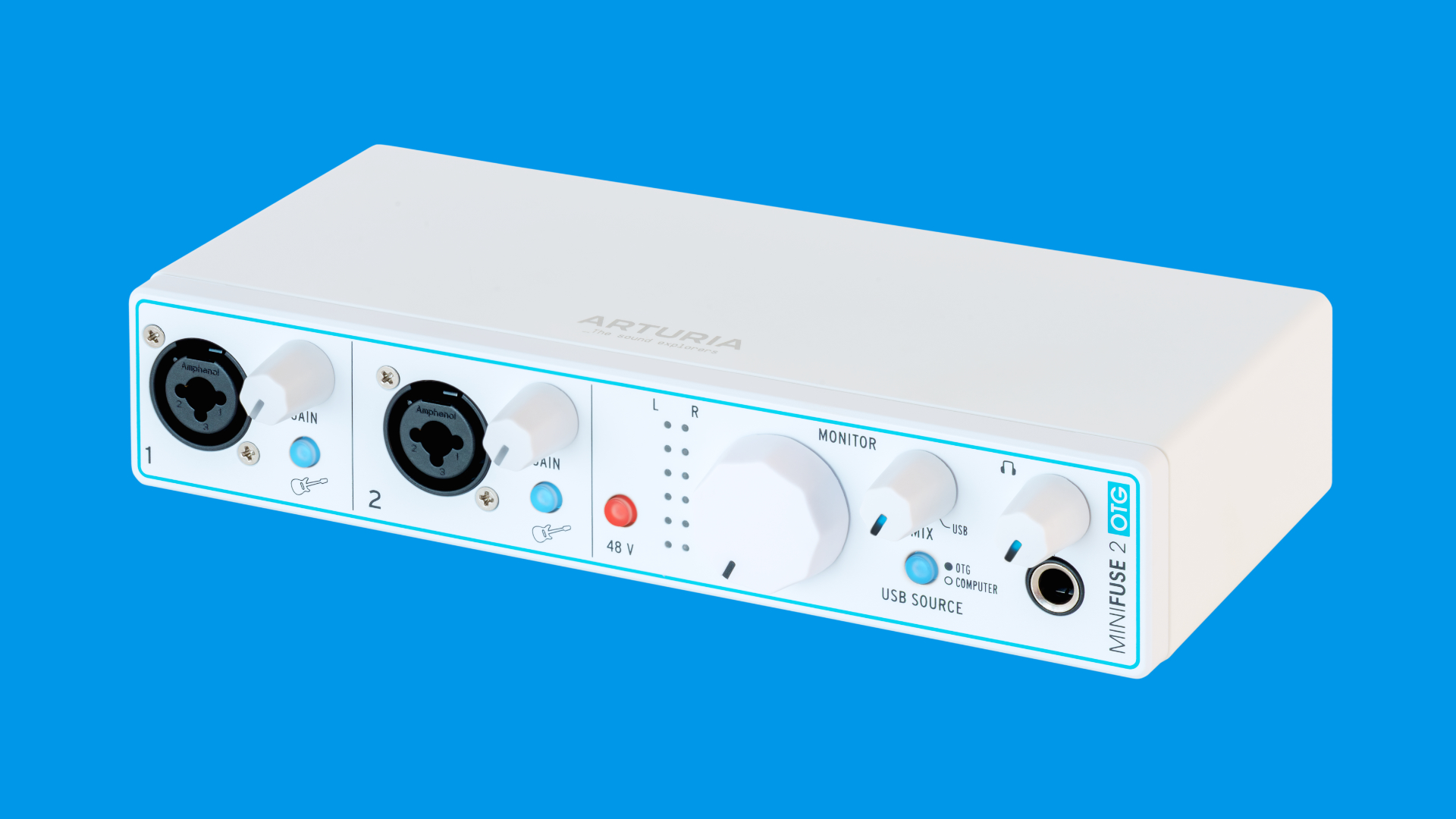
Arturia MiniFuse 2 OTG
The new MiniFuse 2 OTG is a new dual-mode 2-channel USB-C audio interface. It’s a dedicated audio interface for content creators who need to produce live audio on the go but struggle with complex audio routing.
The solution is the Arturia MiniFuse 2 OTG, which offers easy multi-device connectivity for live streaming anywhere.
It is based on the same feature specs as the original MiniFuse 2, except for two main differences. Unlike the regular MiniFuse 2, the MF2 OTG is a pure audio interface with no 5-pin MIDI connectivity. It’s a shame they removed this.
The combo XLR inputs offer a 110dB dynamic range and a -129 dB equivalent input noise, meaning unmatched sound clarity and dynamics. Handy features like hardware monitoring and a USB hub are also onboard.
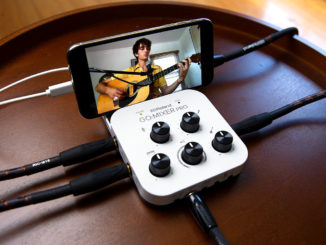
The main difference and highlight of the new version is its dual-mode operation, OTG mode. The dedicated port on the back allows you to connect a smartphone or tablet while the original USB port continues to connect to the computer.
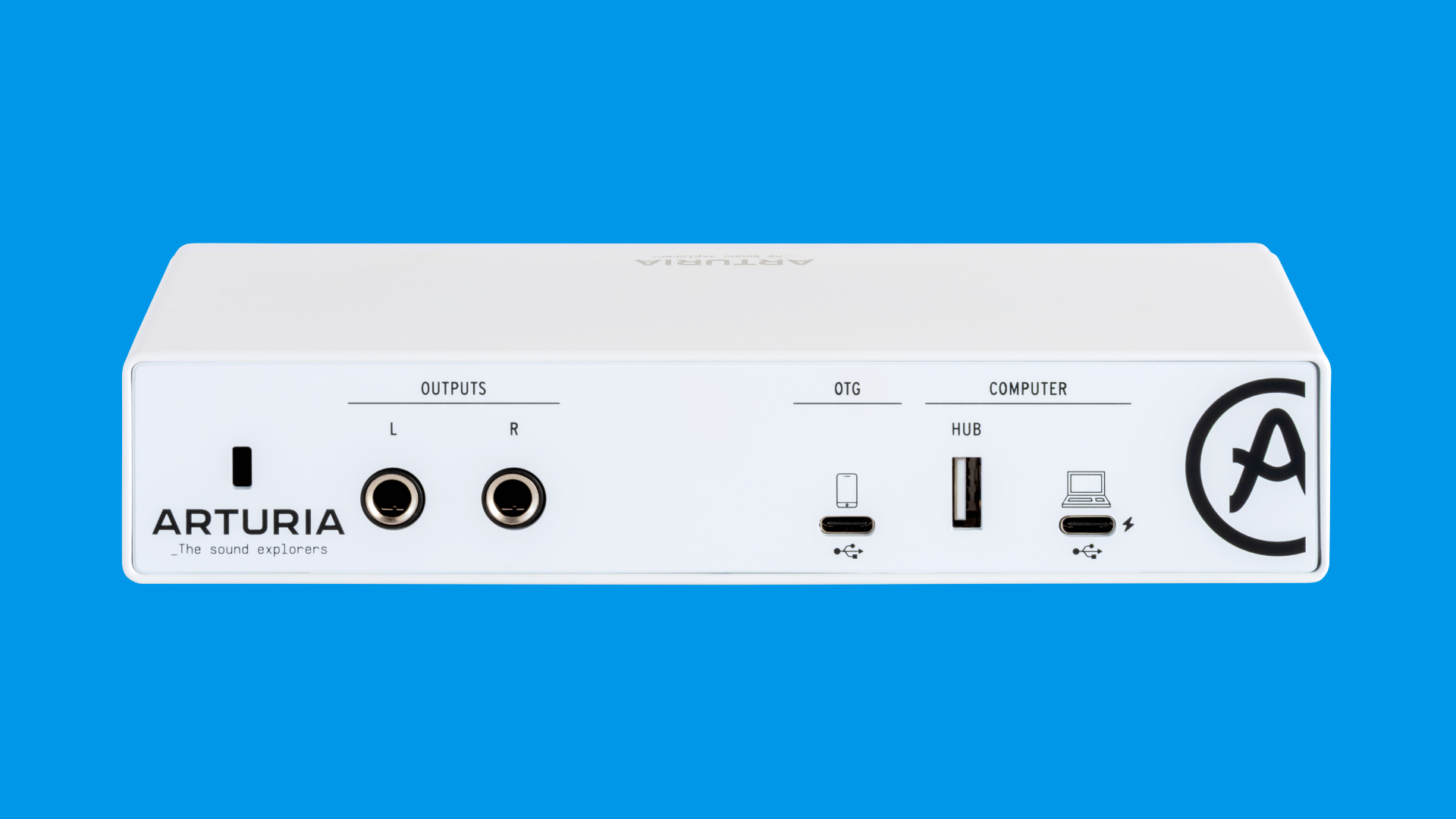
It greatly simplifies the workflow if you want to use high-quality audio for your social media content.
For example, you can connect it to your phone and another port to your computer. In this setup, you can record in your DAW and stream to social media simultaneously. It’s also possible to allow you to use two computers simultaneously.
DAWless setups are also possible. Connect it to your mobile device, and you can record and stream directly on your phone or tablet.
Connectivity & Software
On the connection side, the OTG version has the same audio-related ports as the original MiniFuse 2: two combo XLR jacks, a front-panel headphone output with dedicated level control, and two line-level mono outputs.
It also has a built-in USB hub, and now two USB-C ports (OTG and computer). Arturia also ships the MiniFuse 2 OTG with a big software bundle, including:
- Ableton Live Lite
- Analog Lab Intro
- Auto-Tune Unlimited*
- Chorus JUN-6
- Cubasis LE
- Delay TAPE-201
- Hindenburg PRO (12-month subscription)
- iZotope VEA
- Pre 1973
- Rev PLATE-140
- Splice Creator Plan (3-month subscription)
- Steinberg Cubase LE (3-month subscription)
First Impression
Finding the proper streaming settings can be a bit of a hassle. That’s true. So it’s welcome that there’s now an audio interface that makes it easier.
Arturia MiniFuse 2 OTG is available soon for 174€.
Available from my partner
Thomann
No midi is a total deal breaker. How stupid is this?
because it’s for audio streaming instead of producing
You can transfer MIDI to/from a host computer via the USB Host port.