
NAMM 2026: Yamaha has introduced the MGX, a new series of 18- and 22-channel digital mixers designed for multimedia applications.
The name MG or MGX should be familiar to many. Several Yamaha mixer consoles fall under this name. I use an older MG12 analog mixer in my studio. Later, Yamaha took the hybrid approach with its successor.
At NAMM 2026, Yamaha is introducing the MGX series, a fully digital mixer console line for audio and video producers.
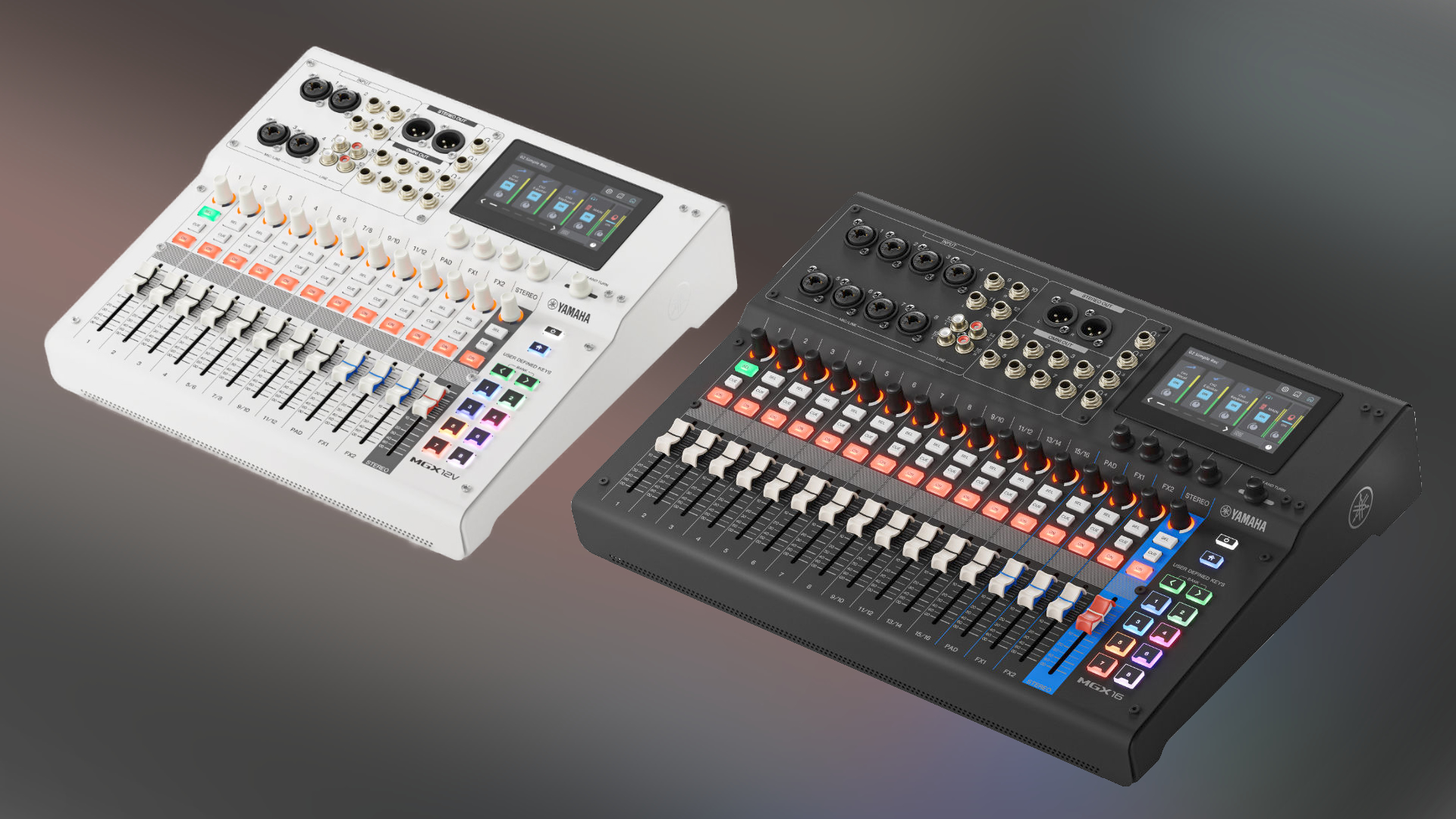
Yamaha MGX
The new MGX series consists of four new devices, or more precisely, eight, since each of them is available in black and white: MGX12 B, MGX12 W, MGX12V B, MGX12V W, MGX16 B, MGX16 W, MGX16V B, and MGX16V W.
With the MGX series, Yamaha is taking its first fully digital approach, offering feature-packed mixing consoles. The focus is not only on audio but also on video.
They are two different sizes: the 18-channel MGX12 and the 22-channel MGX16. On top of that, there are video variants available for each of these called MGX12V and MGX16V
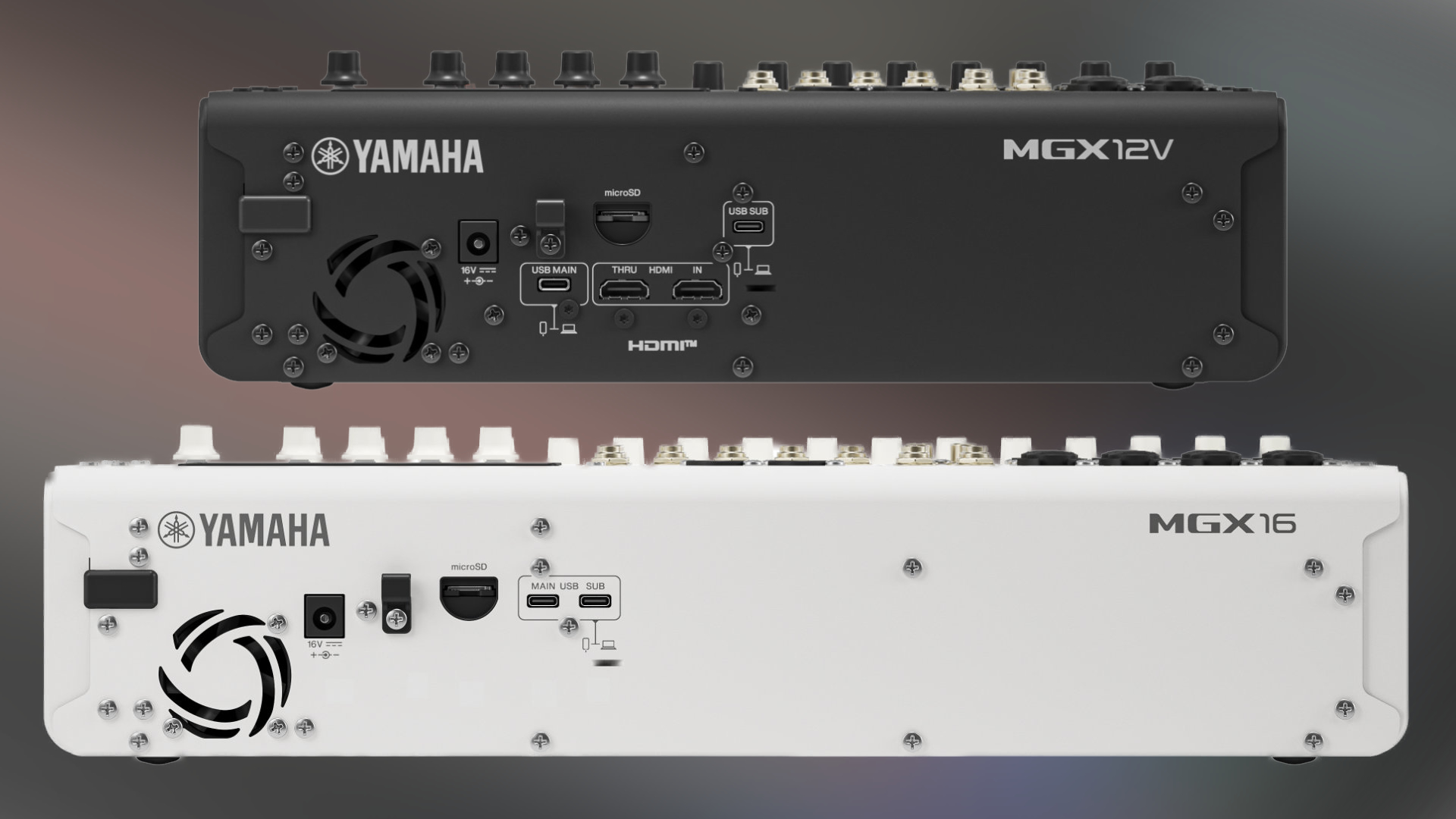
Yamaha remains true to its design principles with the connectivity. The main part of these is located on the front panel, while USB connectivity is on the backside.
Additionally, every model is rack-mountable with the optional Yamaha RK-MGX rack ears, allowing you to mount them. Let’s take a look at the connectivity side.
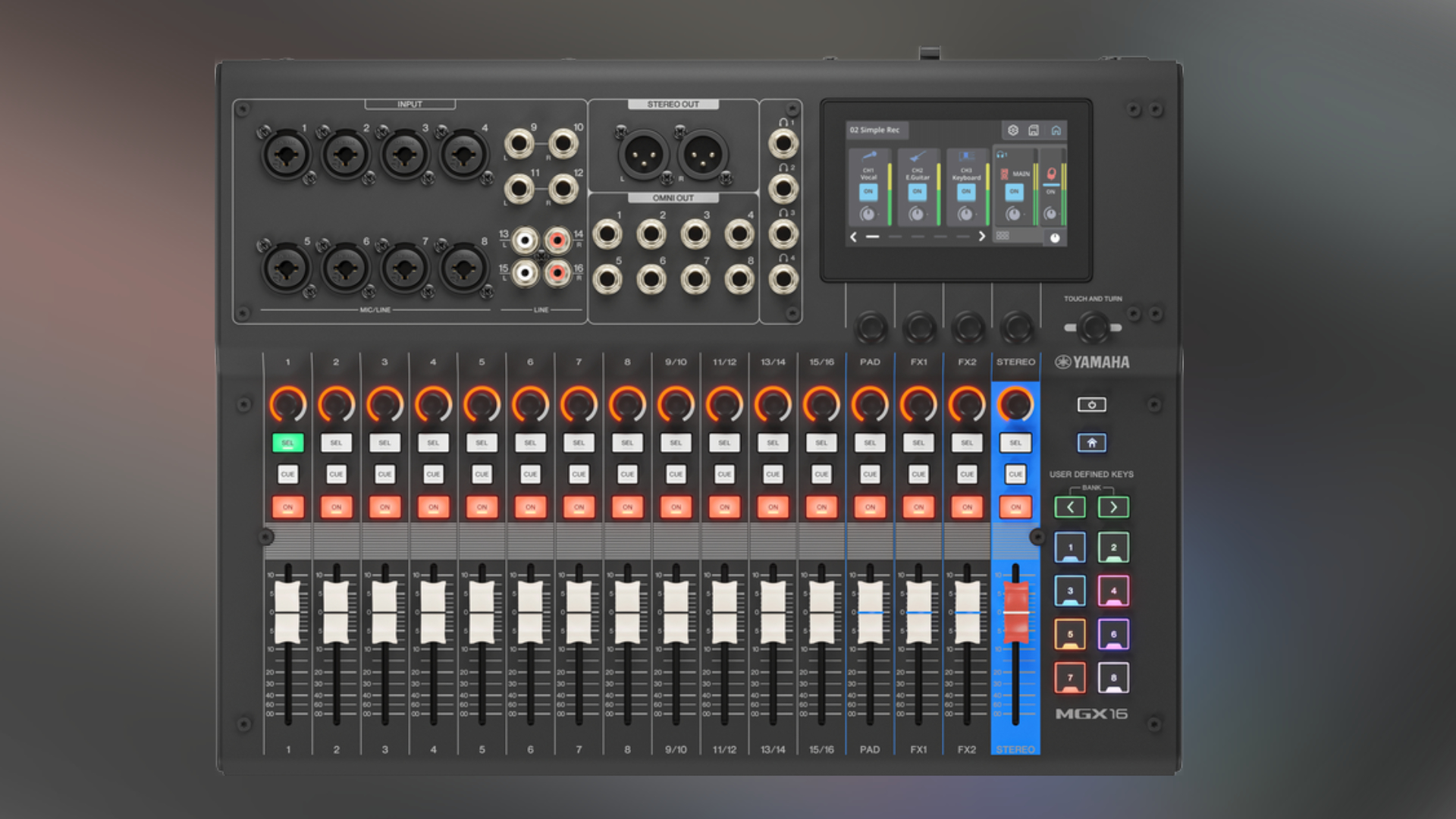
The MGX12/MGX12V offers four XLR combo preamp inputs with up to 86 dB of gain, a 125 dB dynamic range, and 6 TRS outputs.
The MGX16/MGX16V has eight XLR combo preamps and eight TRS outputs. Both versions also have XLR stereo outputs and four headphone sockets for monitoring your signals.
In addition to classic jack and RCA connectors, they also house modern connectivity, including two USB-C ports, a microSD card slot for recording and audio playback, and a Bluetooth module. Yes, you can record either 18 or 22 tracks at up to 96kHz over USB and 16 tracks to microSD.
Operation
The new Yamaha MGX series is operated via 16 mm faders, send knobs, freely assignable pads, and a 4.3-inch LCD touchscreen.
The latter provides full control over the internal software features. For example, you can access the DSP processing for latency-free recording and mixing.
It includes built-in effects such as a noise gate, compressor, EQ, reverb, and a voice changer. There are also handy features such as an auto-gain function and a clip-safe function that prevent distortion during sudden peaks.
MGX12V and MGX16V: the video variants
As noted, there are two video versions: the MGX12V and the MGX16V. These are equipped with an HDMI-to-USB video/audio input with capture and real-time HDMI passthrough.
Furthermore, a special delay allows for fine-tuning of picture and sound to achieve lip-sync in productions. Nice, you can also assign more complex functions as scenes that can be recalled at any time.
The new digital mixing consoles also ship with a software bundle, including Steinberg Cubase AI, Steinberg Wavelab Cast LE, and MixKey enthalten.
Yamaha MGX Series First Impression
At first glance, these are exciting new digital mixer consoles. It’s a shame that 32-bit isn’t an option for Yamaha, but otherwise neat consoles.
The Yamaha MGX series is expected to be available at the end of January 2026. The MGX12 is 799€, the MGX16 is 1099€, the MGX12V 1099€ and the MGX16V is 1359€. Each model is available in black and white.
More information here: Yamaha
Available from my partners


32-bits isn’t nessesary. There’s 125 dB of dynamic range of analog path. 24-bits allows over 140dB of dynamic range which is more than enough for all analog sygnals. Every interface allows to record in 32-bits.
32 bit record makes only really sense for when you have no control on input signals, like eg you are recording audio and video but need to keep your focus on the video work to get right and can not check audio at the same time. This is the only situation it might save you from a bad recording, because of extreme headroom and practically no distortion possible. Such recordings usually will be converted to 24 bit right after capture and before editing.
32 bit audio recording on a mixer, which you have to actually control the signal, makes no sense at all.
But yes, people are filling up their hard drives with 32 bit recordings for each channel because „big number more good than small number“. Grotesque.
I often play live impros and concerts here in Vienna. Playing multiple synths at the same time or controlling FXs live on my iPad, I’m happy to have 32-bit because I know that I have no clipping so I don’t need to check the mixer.
how do you stop all the cables flopping in front of the touch screen?
in the demos they avoid plugging the cables in, but if i had this mixer i would need to plug in the cables.
to pricey and no multi track midi sequencer
too pricey and it can’t make me a coffee 😉