
Fingerlab has released Musyc2, a new iOS/macOS app and AUv3 plugin that lets you make music playfully with physics.
There are many different ways to make music. A keyboard is not strictly necessary. One of the most unusual paths to achieving this is through physics. For example, the Korg Modwave has a Kaoss physics modulator built in, allowing you to make music with physics.
An iOS app that made this very playful and accessible to everyone from the beginning was Fingerlab Muyc2, released in 2013. Twelve years after its initial release, Fingerlab has released Musyc2, the second version with new features.

Fingerlab Musyc2
Musyc2 is the sequel to the original Musyc app from 2013. At its core, Fingerlab Musyc2 uses the AudioKit framework for its sound engine. The concept has remained the same while being expanded in many areas.
Like the original app, Musyc2 is playful, using physics to create organic, unique generative music.
It all starts on a playing field where you can choose from four unique designs (skins) by Jonas Eriksson: classic, B&W, Phantom, and Pastel. You won’t find a classic white/black-key keyboard here; instead, you paint and draw that trigger the physics-based engine.
You can experiment with various advanced physic objects (planet, black hole, modulator…), a built-in physic sequencer, and a shape motion recorder.
What this instrument looks like afterward is entirely up to your imagination. It could be a simple instrument or a multi-timbral generative instrument where different actions are triggered at every turn.
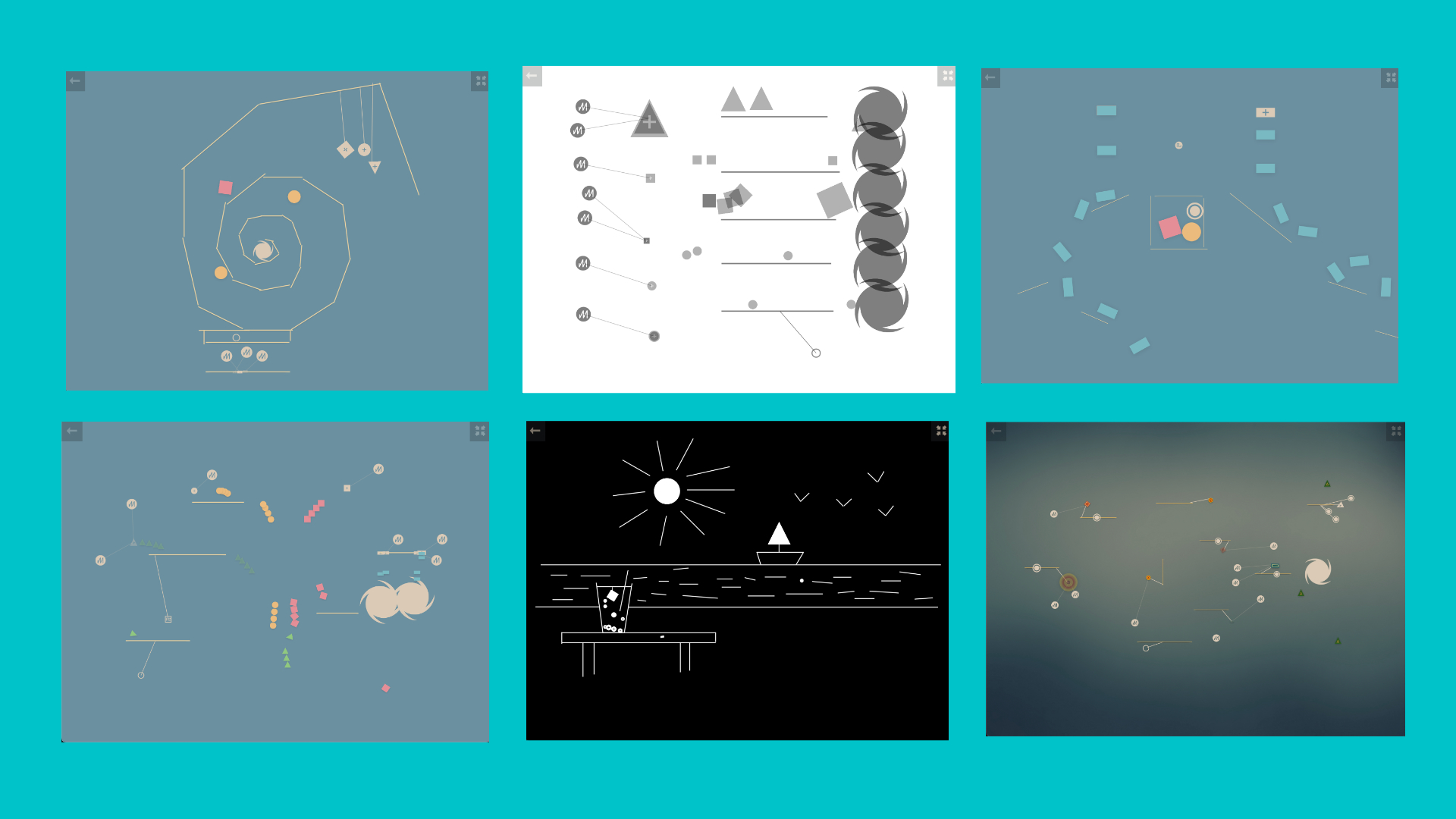
Parameters such as speed, gravity, and tempo let you precisely tweak these objects and their interactions. To ensure the output is melodic and inspiring, there are 11 different harmonic scales to choose from.
Many will recognize the idea from the Tombola sequencer in the OP-1/OP-1 Field, but it’s implemented here in a far more versatile and playful way. Where it’s just a sequencer in the OP-1, here it’s an entirely music creation tool.
Sound And/Or MIDI
Fingerlab Musyc2 is very flexible. On the one hand, you can use it with the internal sound engine, which has been significantly enhanced in version 2.
It comes with 55 ready-to-use sound kits featuring a wide palette of sounds: Wurlitzer, Rhodes, Marimba, Celesta, Vibraphone, and more. Good, there is also a sound kit creation module for creating custom sounds.
There is also an audio mix with level and pitch. length and pan control for each sound. Four FX modules with 10 algorithms (overdrive, delay, reverb, compressor…) and XY pad controls are also onboard for on-the-fly sound refinements.
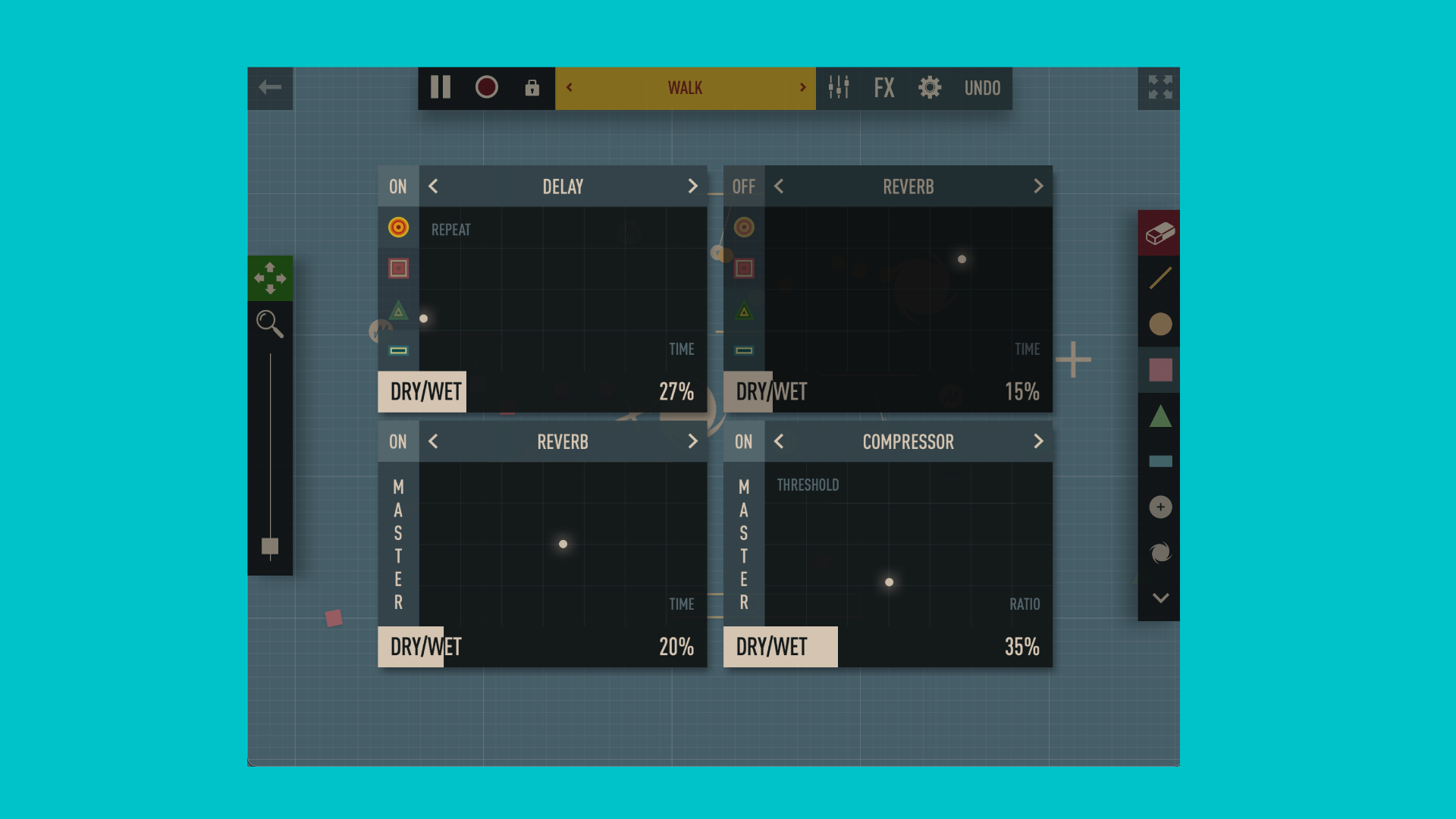
You can also go a step further and route everything as MIDI signals to external instruments instead of using the internal engine. For example, you can route them to hardware synths and use the app as a generative MIDI sequencer.
A top new feature of Musyc2 is the AUv3 plugin version, which lets you use multiple instances as an instrument or MIDI FX. It has support for full MIDI in/out, MIDI mappings,
Further, you have a built-in audio recorder so you can capture your experiments in real time right in the app, without any extra setup.
First Impression
Musyc 2 is an innovative, playful music app that’s hard to compare to anything else. I’m happy to see that the generative app is back in a new version. It takes some time to familiarize yourself with the concept. But after that, it’s super fun.
You can do a lot with it. Simply use it for casual gaming, but also delve deeper and create generative sequencers that can then feed notes to external instruments, like in a modular synth. There are many sequencer apps on the AppStore, but this one is truly special.
Fingerlab Musyc2 is available now for an introductory price of $9,99 (30% OFF) during the first week on the Apple App Store. It runs as a standalone app and AUv3 plugin on iOS and macOS (native Apple Silicon only).
More information here: Fingerlab

Waited a lonnnnng time for this one – the old one was very good, but no MIDI and there was always the carrot dangling of ‘MIDI coming in future update’. So I preordered it and it doesn’t disappoint. The only thing I wish is that it did MIDI sync standalone (it does via AUM or other host). Brilliant app.